How to Sleep Cooler: 10 Things to Try Tonight
If heat is interfering with your sleep, don't start by buying an expensive cooling system. Start with the easiest variables, learn what's actually making you hot, and escalate only when you need to.
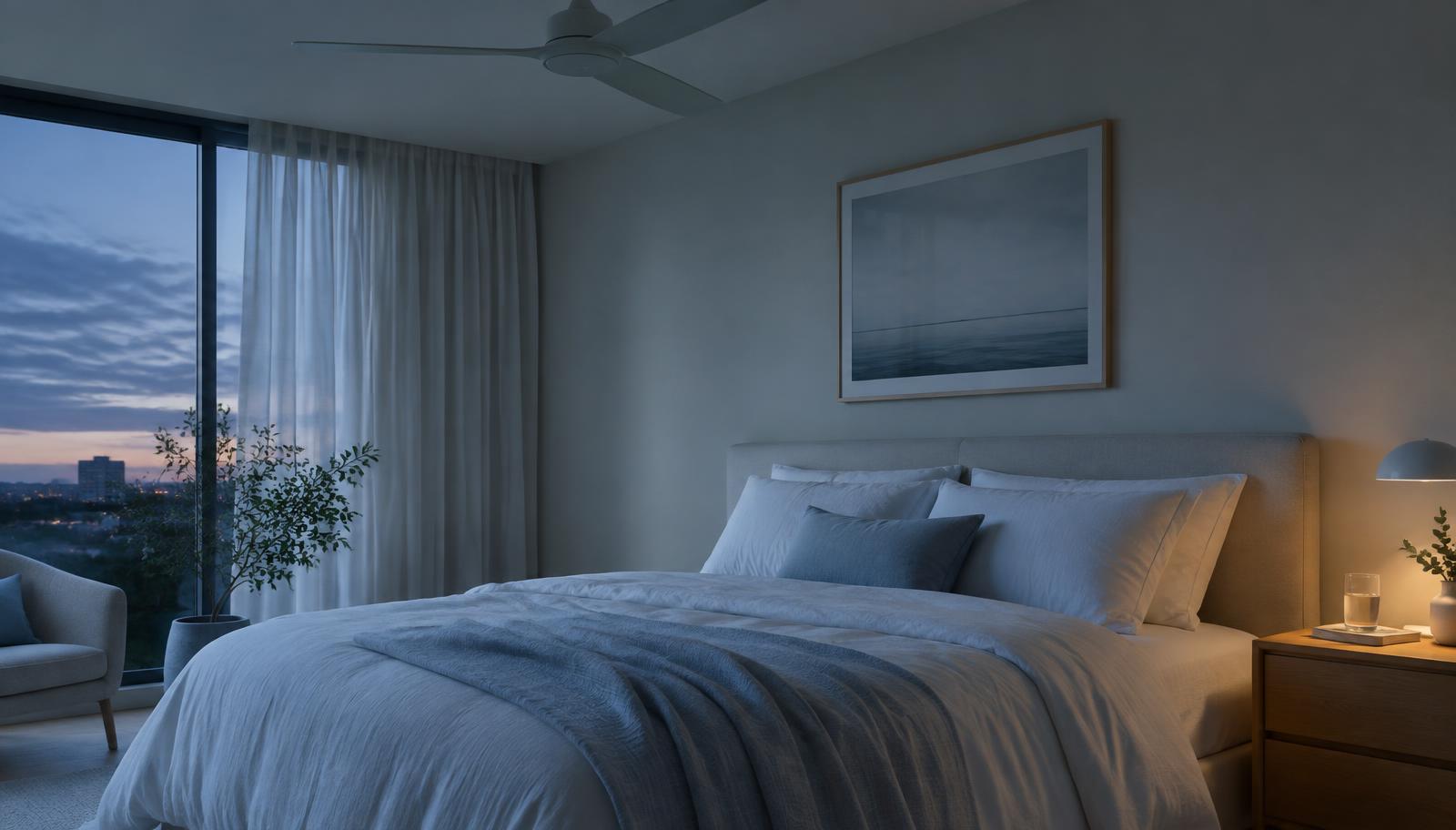
- Research generally associates excessive nighttime heat with worse sleep. But the solution doesn't have to be complicated.[1]
- Work through the problem in this order: room → airflow → bedding → body → bed → technology. You may solve the problem before you ever get to step six.
- Start with the least complicated intervention that solves your problem.
1. Make the bedroom cooler
Start with the obvious. If your bedroom is uncomfortably warm, lower the thermostat or otherwise cool the room before trying to engineer around the problem with your bed.
Don't worry about achieving exactly 65°F. Research shows meaningful individual variation in thermal comfort and sleep. Instead ask: Am I waking because I'm hot? If yes, try somewhat cooler.[2]
2. Get accumulated heat out before bed
Bedrooms can retain heat from the day. When outdoor conditions make it appropriate, ventilation can help exchange warmer indoor air for cooler outside air. Air conditioning can cool the room directly.
The goal is simple: don't climb into an overheated bedroom and expect your sheets to solve the problem.
3. Use a fan
Air movement can increase heat transfer and evaporation, making warm conditions feel more comfortable. A fan is inexpensive and easy to test.
During dangerous extreme heat, however, don't assume a fan alone provides adequate protection. Heat safety depends on temperature, humidity, age and health.
4. Take one layer off the bed
This may be the highest-return change on this list. If you're underneath a top sheet, blanket and heavy duvet, try removing a layer for several nights.
Your bedding creates an insulating microclimate around your body. Changing that microclimate may matter more than lowering the temperature of your entire house another few degrees.
5. Reconsider your sheets and pajamas
Don't get trapped by marketing labels. “Cooling,” “performance,” “temperature regulating” and “breathable” don't guarantee better sleep. Material, weave, weight, moisture transport and the surrounding temperature all matter.
A systematic review found that bedding and sleepwear fibers can affect thermal comfort and some sleep outcomes, but the evidence is limited and doesn't identify one universally superior material. Experiment and judge the result by whether you feel cooler and remain comfortable.[3]
6. Look at what's underneath you
People usually think about blankets when they're hot. Don't forget the other side.
Your mattress, topper and mattress protector all contribute to the thermal environment around your body. If you feel heat building underneath you rather than primarily above you, the sleep surface deserves attention.
Before replacing a mattress, test simpler variables.
7. Separate from your partner—thermally
Not literally. Start with separate blankets. It's one of the simplest solutions for couples with different temperature preferences. One person can sleep under a light blanket while the other uses something heavier.
If that doesn't solve the problem, dual-zone bed technology can provide more individualized temperature control.
8. Pay attention to what happens before bed
If you regularly wake hot, look beyond the bedroom. Alcohol, illness, stress, hormonal changes and certain medications can all influence nighttime warmth or sweating.
Keep a simple one-week log: bedroom temperature, alcohol, exercise, bedding, wake-ups and hot/cold sensation. Patterns often become easier to spot when they're written down.
9. Consider active bed-level airflow
If the simple changes aren't enough, powered airflow is one way to actively change the bed microclimate.
Systems such as BedJet direct air into the bed rather than cooling the mattress surface itself. This may appeal to sleepers who feel hot or sweaty under the covers but don't want a water-circulating mattress cover.
10. Consider active surface-temperature control
If you've worked through the simpler steps and temperature remains a major problem, active mattress-cover systems may be worth considering. These circulate temperature-controlled water through a cover positioned on the mattress, allowing much more direct control over the sleep surface.
The technology clearly changes the thermal environment. Whether that translates into objectively better sleep for a particular person is less certain. A 2024 systematic review and meta-analysis found that cooling bedding interventions did not consistently improve common objective sleep measures, and the certainty of evidence was low to very low. A more recent randomized crossover study of a temperature-controlled mattress cover found a substantial improvement in perceived sleep quality and thermal comfort, but no significant differences in objective sleep or biometric measures.
That's an important distinction. Feeling more comfortable matters. But it isn't the same thing as proving that a device improves every measure of sleep.[4][5]
The SleepWell360 Cooling Ladder
- 01
Free
Thermostat → lighter bedding → separate blankets
- 02
Low cost
Fan → different sheets/sleepwear → bedding changes
- 03
Moderate
Cooling pillow → breathable topper → bed-level airflow
- 04
Premium
Active water-based temperature control
SleepWell360 Recommended Solutions
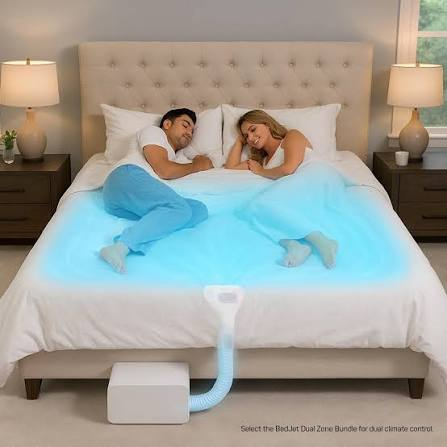
BedJet 3
82/100For sleepers who want active airflow without a water-circulating mattress cover.
View Product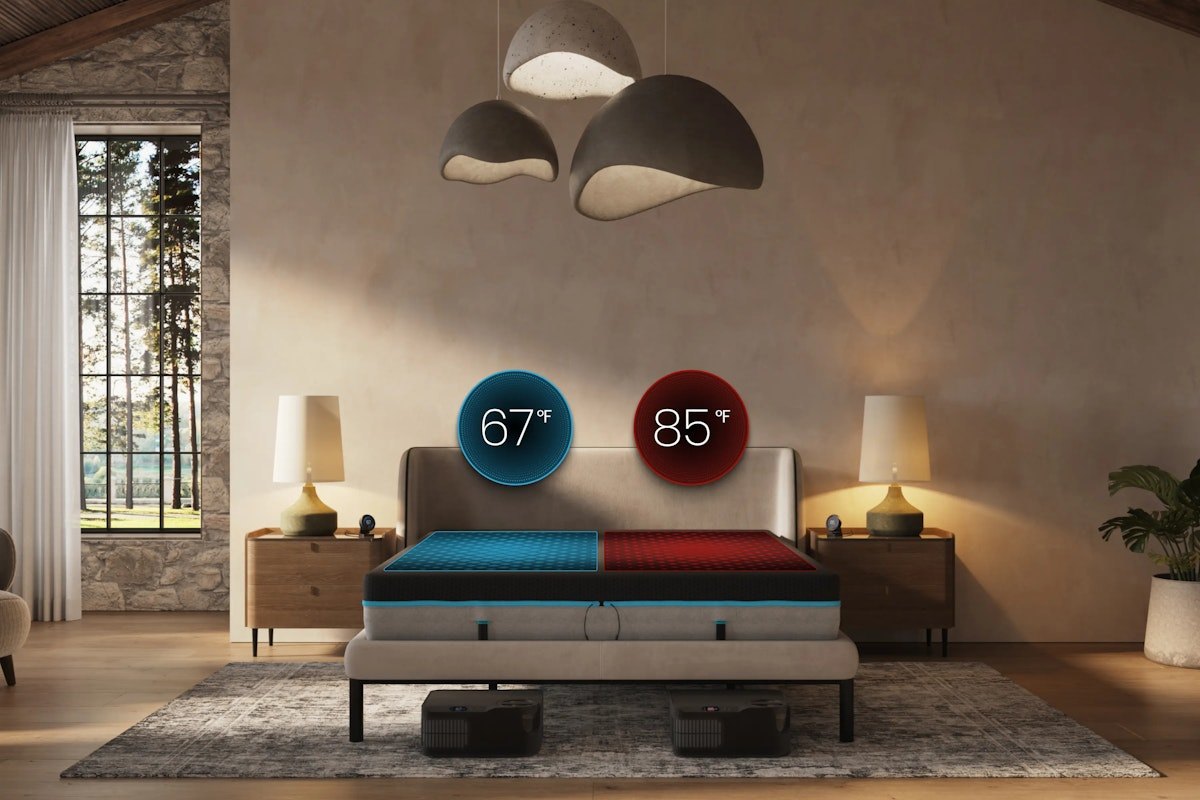
Sleepme Dock Pro
82/100For sleepers looking for active water-based temperature control.
View Product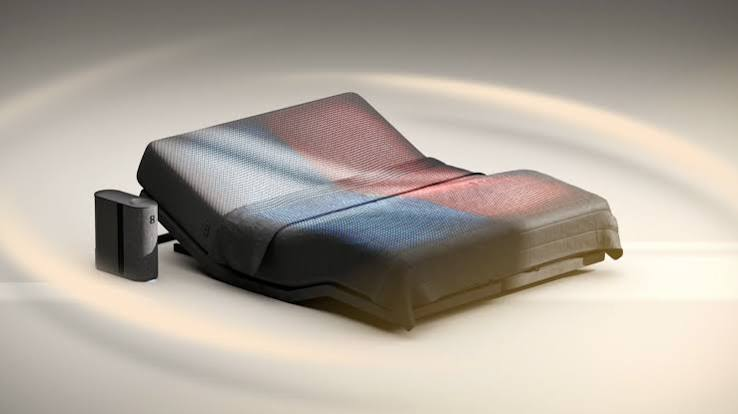
Eight Sleep Pod
86/100For sleepers who want temperature control combined with tracking and automation.
View ProductSleepWell360 may earn a commission if you purchase through some of our links. Our ratings and recommendations are independent of affiliate relationships.
Continue Improving Your Sleep
The Best Temperature for Sleep—and Why It Matters
Is 65°F really the best temperature for sleep? Learn what research says about bedroom temperature, body temperature and finding your personal sleep temperature.
Read Guide
Why Do I Wake Up Hot at Night?
Waking up hot can be caused by your bedroom, bedding, hormones, medications and more. Learn what may be happening and what you can try tonight.
Read Guide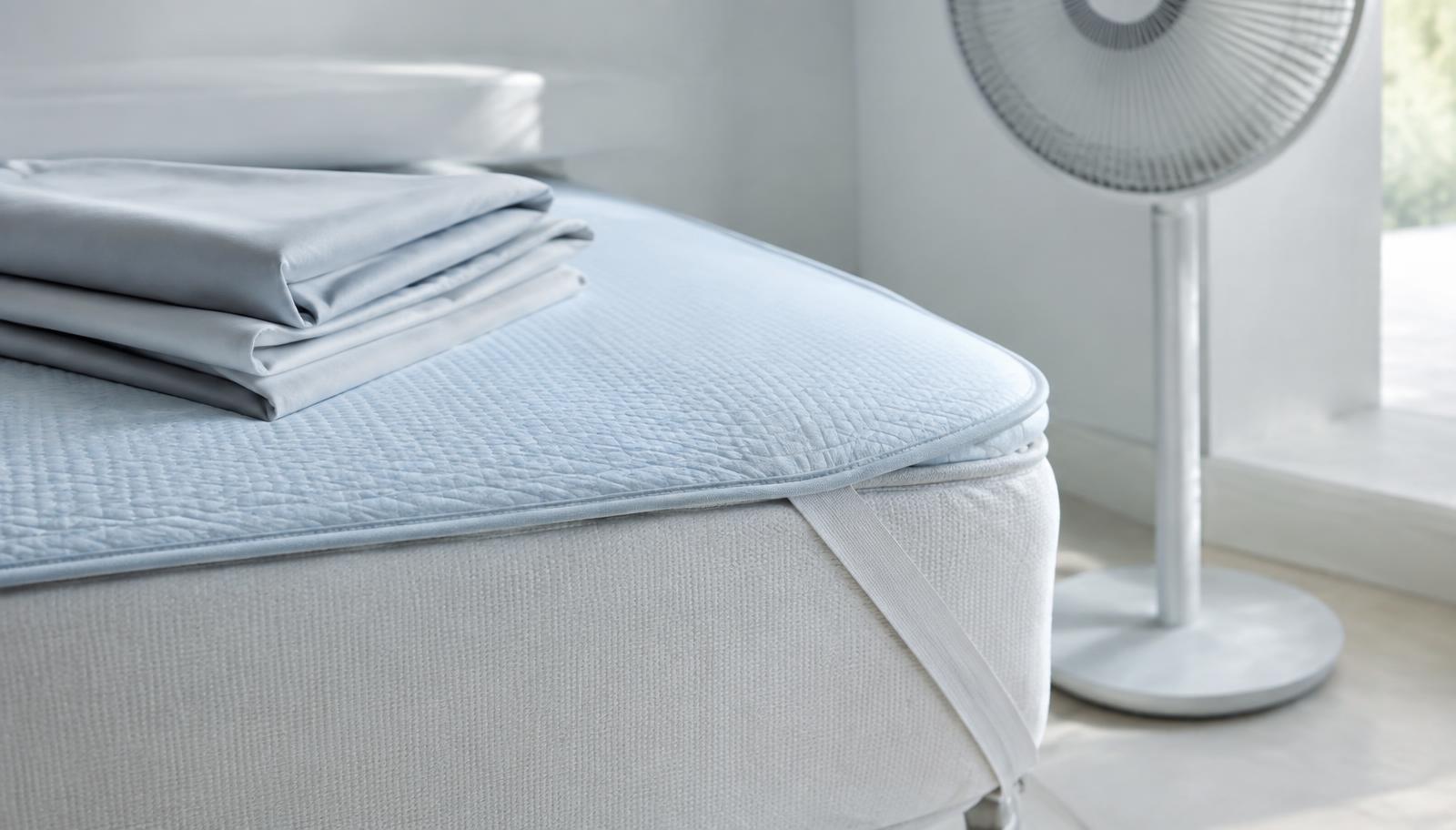
Cooling Mattress Pads vs. Cooling Sheets vs. Fans: What Actually Works?
Cooling sheets, fans, bed airflow or active mattress cooling? Learn how sleep-cooling approaches differ and which may fit your problem.
Read GuideSources & Research
SleepWell360 articles provide general sleep education and are not medical advice.
- 1.PubMed: Minor K, et al. A systematic review of ambient heat and sleep in a warming climate. Sleep Medicine Reviews. 2024.
- 2.PubMed: Nighttime ambient temperature and sleep in community-dwelling older adults. 2023.
- 3.PMC: Li X, Halaki M, Chow CM. How do sleepwear and bedding fibre types affect sleep quality: A systematic review. 2024.
- 4.PubMed: Does body cooling facilitated by bedding compared to control condition improve sleep among adults? A systematic review and meta-analysis. 2024.
- 5.PubMed: Under the Covers: The Effect of a Temperature-Controlled Mattress Cover on Sleep and Perceptual Measures in Healthy Adults.