Cooling Mattress Pads vs. Cooling Sheets vs. Fans: What Actually Works?
“Cooling” has become one of the most overused words in sleep products. A cooling sheet, fan, air-based bed system and water-cooled mattress cover all work differently—and they're not interchangeable.
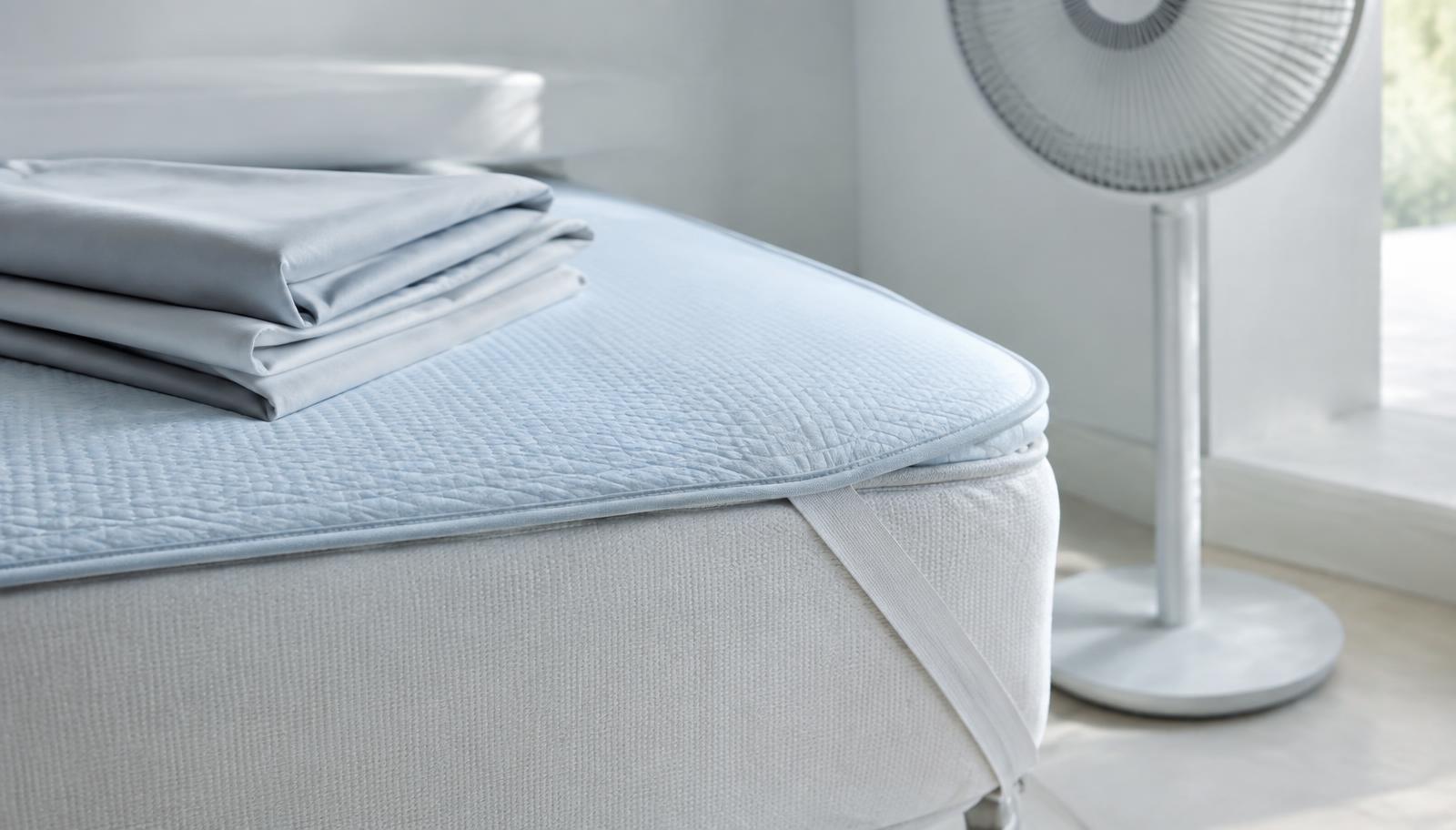
- There are four basic ways to sleep cooler: reduce insulation (sheets, sleepwear and bedding), increase airflow (room fans and bed-level air systems), cool the room (air conditioning) and control the bed surface (active temperature-controlled mattress systems). None is universally “best.”
- Match the fix to the problem: if your room is hot, cool the room. If your covers trap heat, fix the bedding. If you're hot and sweaty inside the bed, airflow may help. If your bedroom is comfortable but the sleep surface still feels hot, active surface-temperature control becomes more interesting.
- Choose the least complicated intervention that solves your problem. If changing the bedding solves it, stop—there is no prize for having the most technologically advanced bedroom. The goal is better sleep.
First: what does “cooling” actually mean?
Imagine four products: a lightweight sheet, a ceiling fan, an air-conditioning system and a temperature-controlled mattress cover.
All four may make you feel cooler. But they do completely different things.
That's why SleepWell360 doesn't treat “cooling” as one product category. The better question is: where is the heat problem occurring?
Cooling sheets: reduce heat trapping
Cooling sheets are passive. They don't generate cold.
Instead, materials and fabric construction can affect insulation, air permeability, moisture transport, evaporation and how the fabric feels against your skin.
There is some evidence that bedding material can affect sleep under particular environmental conditions. A 2024 systematic review found potentially meaningful differences among certain fibers and conditions, but the overall evidence base was small and heterogeneous.
Best for: people whose bedding feels hot or heavy.
Advantages: no electricity, no noise, relatively inexpensive, easy to try.
Limitations: doesn't lower room temperature, can't overcome every hot mattress or bedroom, and “cooling” marketing claims vary widely.
SleepWell360 view: an excellent early intervention because it's simple and relatively inexpensive—but don't expect sheets to behave like air conditioning.[1]
Fans: move air
A fan doesn't necessarily make the room colder. It moves air across your body, which can increase heat transfer and help sweat evaporate under appropriate conditions. That can significantly change how warm you feel.
Best for: warm bedrooms and people who like moving air.
Advantages: inexpensive, immediate, doesn't change the mattress, can improve air movement, and some sleepers like the background sound.
Limitations: doesn't lower actual room temperature, may bother people who dislike airflow or noise, and isn't a substitute for appropriate heat-safety measures during dangerous extreme heat.
SleepWell360 view: probably the best cooling experiment per dollar. Try this before buying expensive sleep technology.
Air conditioning: cool the environment
This is obvious but often overlooked when discussing expensive sleep technology. If your entire bedroom is too hot, the most logical solution may simply be cooling the bedroom.
Air conditioning reduces the ambient temperature around you, your mattress, your bedding and your partner rather than targeting only the bed.
Best for: hot rooms and warm climates.
Advantages: actually reduces ambient temperature, benefits the entire room, and is already available in many homes.
Limitations: energy cost, one room temperature may not satisfy both partners, and it doesn't necessarily solve a heat-retaining sleep surface.
SleepWell360 view: solve the room before trying to engineer around a hot room.
Bed-level air cooling: move air where it matters
Rather than moving air around the room, systems such as BedJet direct powered airflow into the bed environment.
This is fundamentally different from a cooling sheet. The sheet manages the thermal environment passively. Bed-level airflow actively changes the bed microclimate.
Best for: hot or sweaty sleepers who want active airflow without a water-circulating mattress cover.
Advantages: active airflow, can help move heat and moisture, works with an existing mattress, no water circulation, and dual-zone configurations are available.
Limitations: adds equipment to the bed, the airflow sensation isn't for everyone, and it doesn't directly control mattress-surface temperature in the same way a water-based system can.
SleepWell360 view: a compelling middle ground between passive bedding and premium active surface-temperature control.
Water-based mattress cooling: control the surface
Systems such as Sleepme and Eight Sleep take another approach. Temperature-controlled water circulates through channels in a pad or cover positioned on the mattress. This provides direct control over the thermal environment at the sleep surface.
This can be particularly attractive when the room feels fine but the bed feels hot. Or when partners want substantially different thermal environments.
Best for: persistent hot sleepers who want direct bed-level temperature control.
Advantages: direct surface-temperature control, can cool or warm, dual-zone options, and some systems automatically adjust temperature through the night.
Limitations: more expensive, additional hardware, maintenance, changes the bed setup, and some features may require subscriptions.
SleepWell360 view: the most sophisticated solution—but sophistication isn't the same thing as necessity.
Does active mattress cooling actually improve sleep?
This is where we need to separate physiology, comfort and evidence.
Thermoregulation is closely connected to sleep physiology, and excessive ambient heat is generally associated with poorer sleep.
But that doesn't automatically mean a cooling mattress improves everyone's sleep.
A 2024 systematic review and meta-analysis of nine studies found that cooling bedding strategies did not produce consistent improvements in sleep onset latency, sleep efficiency, sleep stages, wake after sleep onset or total sleep time. The certainty of the evidence was rated low to very low.
A more recent randomized crossover study followed 34 healthy adults using a temperature-controlled mattress cover with the temperature feature on and off. Participants reported substantially better perceived sleep quality and thermal comfort when temperature control was active, but researchers found no significant differences in objective sleep or biometric measures.
That's why SleepWell360 doesn't say: “Buy a cooling mattress and you'll sleep better.”
We say: if temperature is disrupting your sleep, choose the least complicated intervention that adequately solves the problem.[2][3][4]
Which cooling solution should you choose?
Bedroom itself is hot → Air conditioning / room cooling.
Bedding feels hot or heavy → Lighter, breathable bedding.
You want inexpensive cooling → Fan.
You wake hot and sweaty inside the bed → Consider bed-level airflow.
Sleep surface feels persistently hot → Consider active surface-temperature control.
Partner likes a very different temperature → Separate bedding or dual-zone system.
You want temperature + tracking + automation → Premium integrated system.
The recommendations start with the problem, not the brand. That's how SleepWell360 thinks about products.
What would we try first?
- 01
Adjust the room
Cool the bedroom itself before engineering around it.
- 02
Change the bedding
Lighter layers, breathable sheets, separate blankets.
- 03
Add airflow
A fan, or bed-level airflow if the bed is where you get hot.
- 04
Determine whether the sleep surface itself remains a problem
If the room is comfortable and the bedding is light but the bed still feels hot.
- 05
Consider active bed-level temperature control
Water-based or integrated systems for direct surface control.
Before you buy anything…
Ask one question: is Temperature actually what's keeping me from sleeping better?
You might spend heavily optimizing temperature when your bigger issue is Light, Sound, Surface or Recovery.
That's why SleepWell360 starts with the person—not the product.
SleepWell360 Recommended Solutions
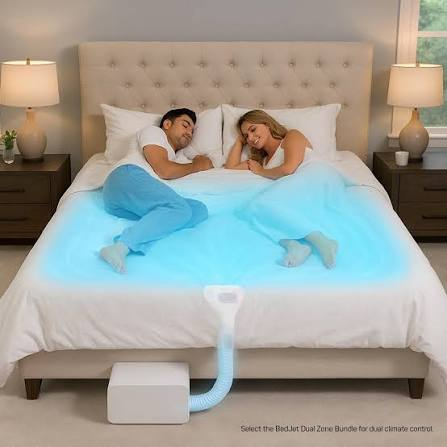
BedJet 3
82/100For sleepers who want active airflow without a water-based mattress cover.
View Product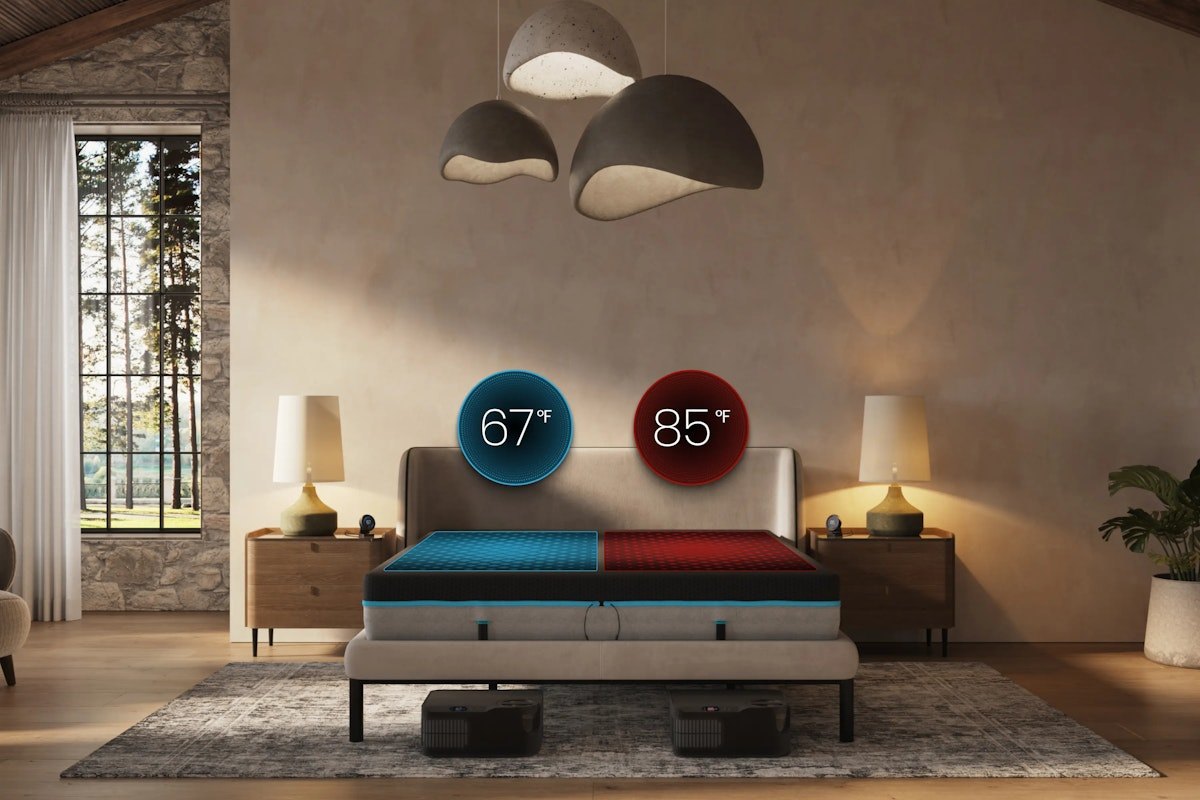
Sleepme Dock Pro
82/100For sleepers looking for water-based temperature control at the sleep surface.
View Product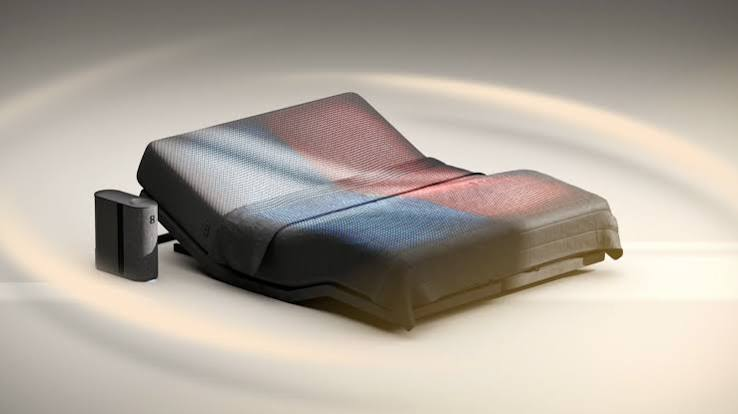
Eight Sleep Pod
86/100For sleepers who want temperature control integrated with tracking and automation.
View ProductSleepWell360 may earn a commission if you purchase through some of our links. Our ratings and recommendations are independent of affiliate relationships.
Continue Improving Your Sleep
The Best Temperature for Sleep—and Why It Matters
Is 65°F really the best temperature for sleep? Learn what research says about bedroom temperature, body temperature and finding your personal sleep temperature.
Read Guide
Why Do I Wake Up Hot at Night?
Waking up hot can be caused by your bedroom, bedding, hormones, medications and more. Learn what may be happening and what you can try tonight.
Read Guide
How to Sleep Cooler: 10 Things to Try Tonight
Too hot to sleep? Try these 10 practical ways to sleep cooler, from free bedroom changes to airflow, bedding and active bed-cooling systems.
Read GuideSources & Research
SleepWell360 articles provide general sleep education and are not medical advice.
- 1.PMC: Li X, Halaki M, Chow CM. How do sleepwear and bedding fibre types affect sleep quality: A systematic review. Journal of Sleep Research. 2024.
- 2.PubMed: Minor K, et al. A systematic review of ambient heat and sleep in a warming climate. Sleep Medicine Reviews. 2024.
- 3.PubMed: Does body cooling facilitated by bedding compared to control condition improve sleep among adults? A systematic review and meta-analysis. 2024.
- 4.PubMed: Under the Covers: The Effect of a Temperature-Controlled Mattress Cover on Sleep and Perceptual Measures in Healthy Adults.