How to Choose the Right Pillow for Your Sleep Position
The best pillow isn't the softest, firmest or most expensive. Its most important job is much simpler: comfortably support your head and neck in the position you actually sleep.

- Start with sleep position and pillow height, not pillow brand. In general: side sleepers often need more loft; back sleepers often need moderate loft; stomach sleepers generally need less loft—or sometimes very little pillow under the head. But these aren't rigid rules. Your shoulder width, body size and—critically—how far you sink into your mattress affect the height that feels right.
- Research confirms that pillow height can change cervical-spine alignment and head/neck pressure, but there is no universally proven “perfect” pillow height. And because your mattress changes the geometry, a pillow that was perfect on one bed may feel wrong on another.[1]
- The SleepWell360 rule: fit the pillow to the sleeper, not the sleeper to the pillow.
What is your pillow actually supposed to do?
A pillow fills the space between your head and the mattress.
That's it.
But that space changes dramatically depending on your position. Lie on your side and there's a relatively large gap created by your shoulder. Roll onto your back and the gap changes. Roll onto your stomach and a thick pillow may push your head farther away from a comfortable position.
So before asking “What's the best pillow?” ask: “How do I actually sleep?”
If you sleep on your side
Side sleepers usually need enough pillow height to fill the space created by the shoulder. Too little loft can allow the head to tilt downward toward the mattress. Too much can push it in the opposite direction.
Start with: moderate-to-higher loft. But don't use height alone. A broad-shouldered side sleeper on a firm mattress may need more loft than a smaller sleeper on a soft mattress. Why? Because the softer mattress may allow the shoulder to sink farther into the bed, reducing the distance between the head and mattress.
Look for: adjustable fill; enough support to resist collapsing completely; comfort around the ear and face; and a height that works with your mattress.
If you sleep on your back
Back sleepers generally don't need to fill the same large shoulder gap. An excessively tall pillow can push the head forward. An extremely flat pillow may not provide enough support for some sleepers.
Start with: moderate loft. The goal is comfortable support for the natural position of the head and neck. Some people also prefer a pillow with additional support beneath the neck and a slightly lower area beneath the head.
Harvard Health similarly recommends that back sleepers support the natural curve of the neck rather than simply elevating the entire head.[2]
If you sleep on your stomach
Stomach sleeping presents a different problem. Your head typically has to rotate to one side to breathe. Adding a tall pillow can increase the amount of neck positioning involved.
Start with: low loft. Some stomach sleepers prefer a very thin pillow or little elevation beneath the head.
If you regularly wake with neck discomfort, changing sleep position may be worth experimenting with. Harvard Health notes that back and side sleeping generally place less strain on the neck than stomach sleeping.[2]
What if you change positions all night?
Welcome to the real world. Many people aren't exclusively side sleepers or back sleepers. They move.
For combination sleepers, adjustability becomes especially valuable. A pillow that lets you add or remove fill can help you find a compromise that works across positions. It won't make one pillow geometrically perfect in every position. But it gives you more control.
Your mattress changes the pillow you need
This may be the most important thing pillow shoppers overlook.
Firm mattress: your shoulder may stay higher above the mattress. For a side sleeper, that can mean a larger gap between the mattress and head.
Softer mattress: your shoulder may sink farther into the surface. That can reduce the required pillow height.
So a pillow that was perfect on your previous mattress may suddenly feel wrong after you buy a new one. Nothing necessarily happened to the pillow. The geometry changed.
That's why SleepWell360 evaluates Mattress + Pillow together as Surface.
Does pillow height really matter?
Yes—but not in the simplistic way marketers sometimes suggest.
A biomechanical study testing four pillow heights found significant changes in pressure distribution around the head and neck and in measures of cervical-spine alignment as pillow height increased.
The study was very small—only 10 healthy adults—so it cannot tell you exactly how tall your pillow should be. But it reinforces a logical point: pillow height changes how your head and neck are positioned.[1]
What about pillow material?
Memory foam. Latex. Down. Down alternative. Polyester. Buckwheat. Spring. Each feels different. But there's no strong evidence establishing one material as the best choice for everyone.
A 2021 systematic review and meta-analysis found that certain rubber and spring pillows were associated with reductions in neck pain and waking symptoms in people with chronic neck pain. But importantly, pillow designs did not significantly improve overall sleep quality in the pooled analysis.
A 2025 systematic review found only five qualifying interventional studies involving 239 participants and similarly concluded that pillow characteristics may matter while the evidence remains limited.
So don't confuse “This pillow feels good to me” with “This material has been scientifically proven to improve sleep.” Those are very different claims.[3][4]
How to tell if your pillow may be wrong for you
Look for clues:
You wake with neck stiffness that wasn't present before bed.
You constantly fold your pillow in half.
You stack multiple pillows to get comfortable.
You repeatedly put your arm under the pillow for more height.
You wake and remove the pillow during the night.
Your head feels pushed forward when you're on your back.
Your head noticeably tilts toward or away from the mattress when you're on your side.
These don't prove the pillow is causing a problem. But they're good reasons to experiment.
The 7-night pillow test
Don't judge a pillow after 10 minutes in a store. For seven nights, pay attention to:
- 01
Night 1–2
Does the height feel obviously wrong?
- 02
Night 3–4
Are you repeatedly adjusting it?
- 03
Night 5–7
How does your neck and shoulder feel in the morning?
What we like about adjustable pillows
Adjustability solves one of the industry's biggest problems: pillows are manufactured in fixed configurations. People aren't.
An adjustable-fill pillow allows you to change loft instead of guessing whether you need low, medium or high.
That's why adjustable pillows are a logical starting point for many sleepers—not because adjustable automatically means “better sleep,” but because it allows personalization.
One final rule
Don't buy a pillow simply because you're a “side sleeper.”
Buy it because: you're a side sleeper + with your shoulder width + on your mattress + with your comfort preferences.
That's personalization.
SleepWell360 Recommended Solutions
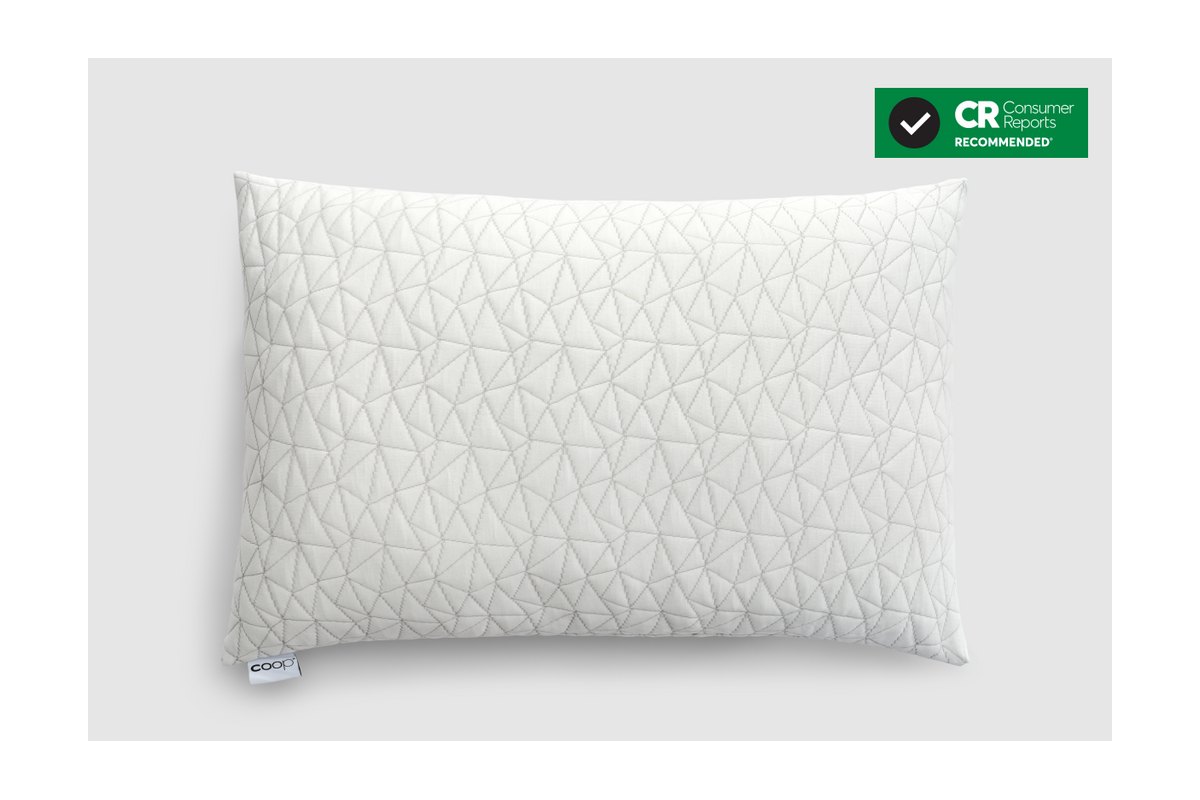
Coop Original Adjustable Pillow
86/100A strong option for sleepers who want to add or remove fill to experiment with loft rather than committing to one fixed height.
View Product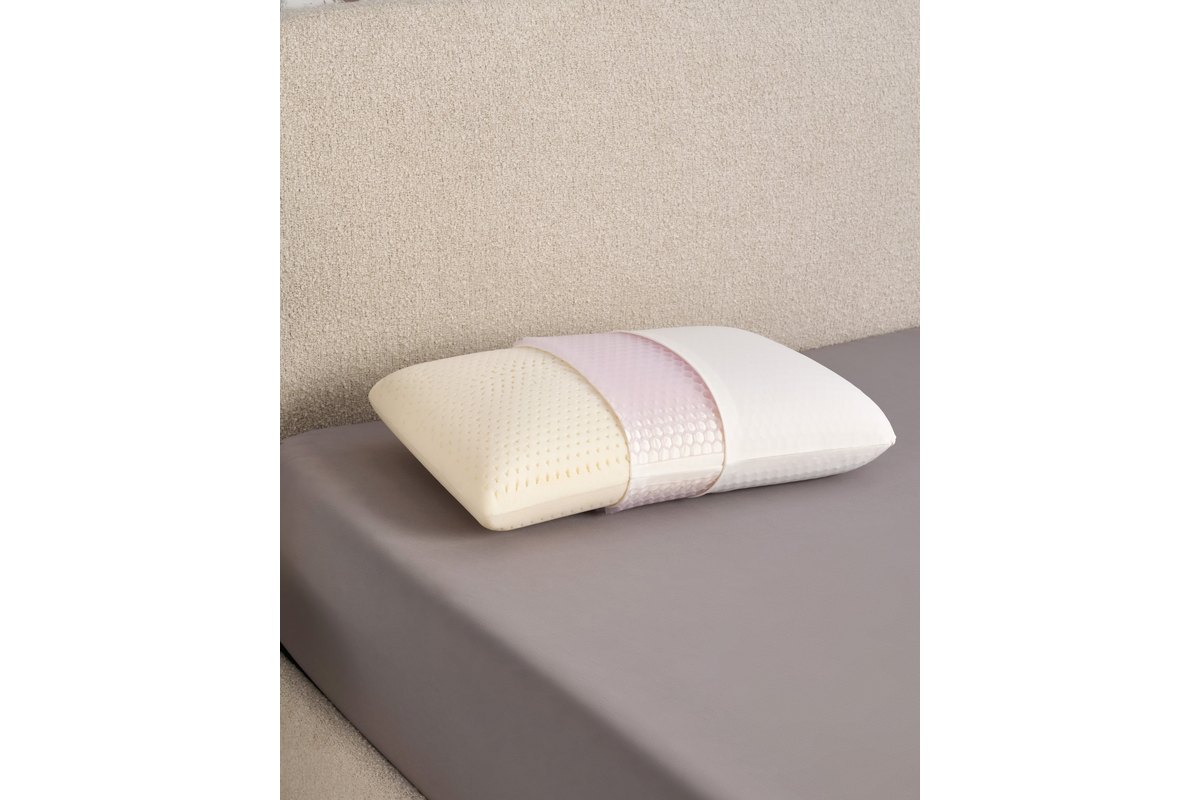
Purple Harmony
84/100A premium option for sleepers who prioritize a responsive feel and airflow.
View Product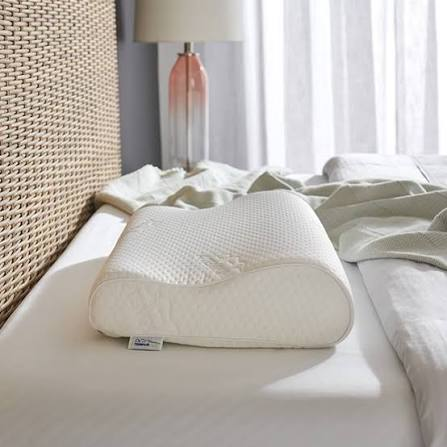
Tempur-Neck
85/100Designed around a more structured cervical-support shape for sleepers who prefer that feel.
View ProductSleepWell360 may earn a commission if you purchase through some of our links. Our ratings and recommendations are independent of affiliate relationships.
Continue Improving Your Sleep
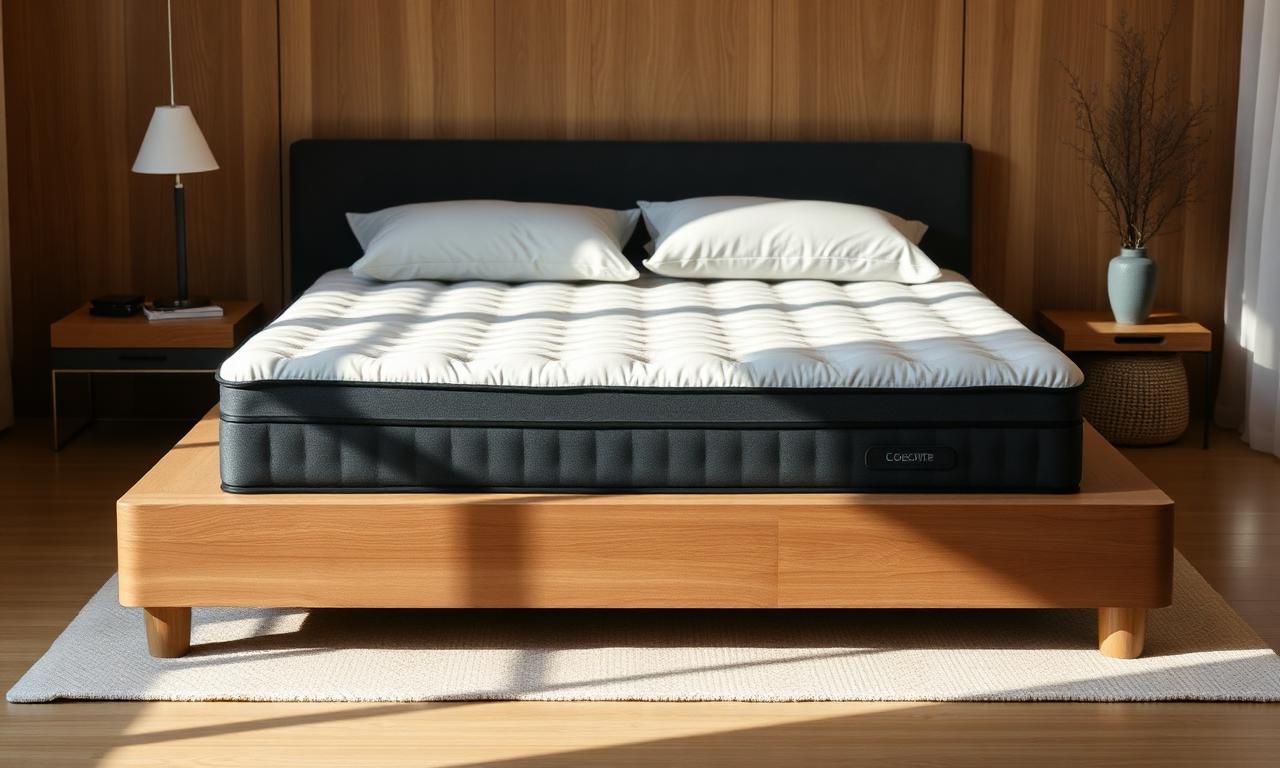
How Your Mattress and Pillow Affect Your Sleep
Your mattress and pillow can affect comfort, pressure, spinal support and nighttime awakenings. Learn what the research says and how to find the right sleep surface.
Read Guide
Is Your Mattress Causing You to Wake Up?
Waking sore, stiff or uncomfortable? Learn seven signs your mattress may be disrupting your sleep—and what to try before replacing it.
Read GuideHow to Choose the Right Pillow Height
A practical guide to pillow height, firmness, sleep position and signs that your current pillow may not fit.
Read GuideSources & Research
SleepWell360 articles provide general sleep education and are not medical advice.
- 1.PubMed: Ren S, et al. Effect of pillow height on the biomechanics of the head-neck complex: investigation of the cranio-cervical pressure and cervical spine alignment. PeerJ. 2016.
- 2.Harvard Health: Harvard Health Publishing. Say “good night” to neck pain. 2022.
- 3.PubMed: Pang J, et al. The effects of pillow designs on neck pain, waking symptoms, neck disability, sleep quality and spinal alignment in adults: A systematic review and meta-analysis. Clinical Biomechanics. 2021.
- 4.PubMed: Ghosh S, et al. Effect of pillow on pain, disability and sleep quality in patients with chronic neck pain: A systematic review. 2025.