How Your Mattress and Pillow Affect Your Sleep
You spend roughly a third of every day in bed. Your mattress and pillow don't create good sleep on their own—but when your sleep surface leaves you uncomfortable, poorly supported or waking in pain, it can become a real barrier to sleeping well.
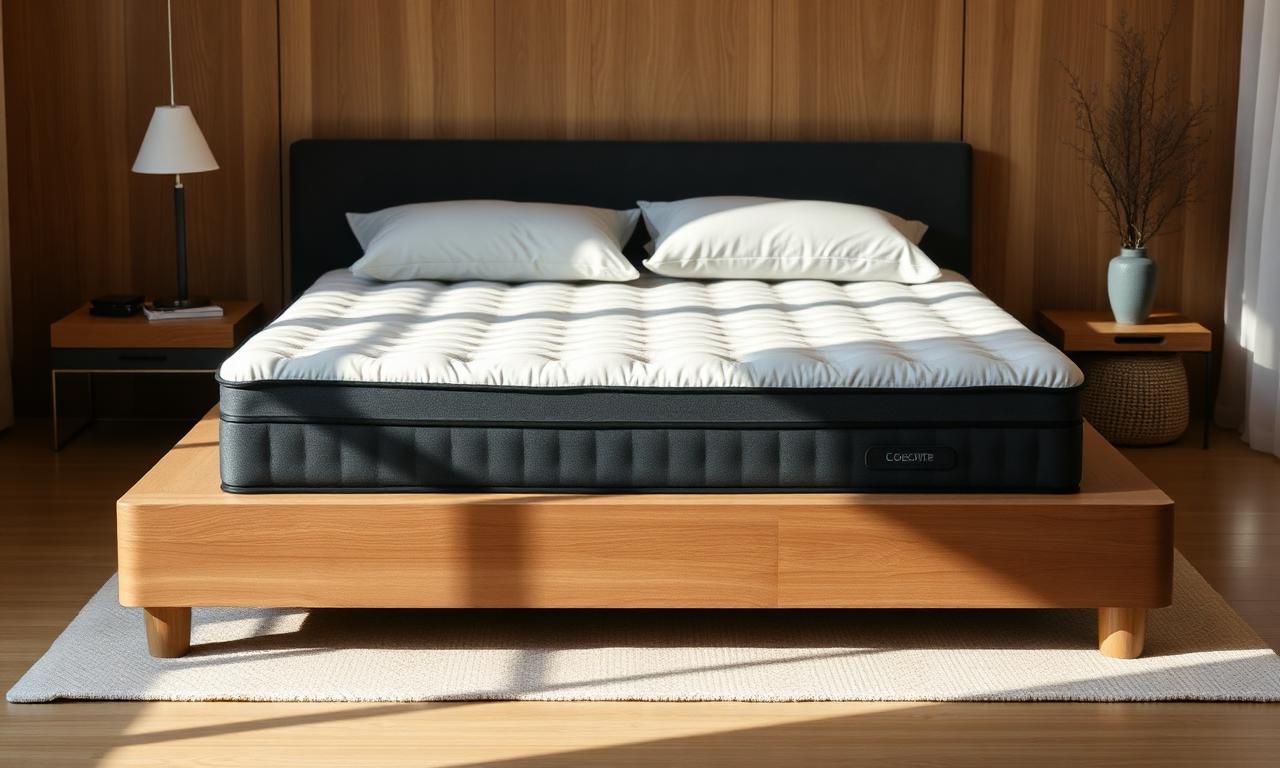
- Your mattress and pillow have two basic jobs: support your body comfortably, and avoid creating pressure or positions that repeatedly wake you. There isn't one perfect mattress firmness or pillow for everyone.
- Research generally favors medium-firm mattresses over very firm mattresses, particularly for people with nonspecific low-back pain. But your body size, sleep position, pain, preferences and pillow all affect what feels supportive.[1][2]
- For pillows, height and shape influence head and neck position, but the evidence doesn't support one universally best design.[3][4]
- The practical rule: your sleep surface should fit you—not the other way around.
Why does your sleep surface matter?
Sleep isn't completely motionless. Throughout the night, you change positions in response to comfort, temperature and other signals.
Your mattress supports most of your body weight. Your pillow supports your head and neck.
Together, they influence: pressure distribution, spinal position, muscle comfort, temperature, and how easily you can change positions.
If something isn't working, the result may be subtle. You may not think “my mattress woke me up.” Instead, you may roll over repeatedly, wake with a stiff shoulder, reposition your pillow, feel pressure at your hip or wake in the morning with discomfort you didn't have when you went to bed.
Those clues matter.
Firmer isn't always better
For decades, people with back pain were often told to sleep on a hard mattress. Research doesn't support that as a universal rule.
A randomized, double-blind trial involving 313 adults with chronic nonspecific low-back pain compared firm and medium-firm mattresses for 90 days. People assigned to medium-firm mattresses had better outcomes for pain while lying in bed, pain upon rising and disability.
Systematic reviews have reached a similar general conclusion: medium-firm mattresses tend to perform well for comfort, sleep quality and spinal alignment.
But be careful with the words “medium-firm.” Firmness isn't perfectly standardized across the mattress industry. One manufacturer's “medium” can feel very different from another's. And what feels medium-firm to a 120-pound sleeper may feel different to someone who weighs 220 pounds.
What should a mattress actually do?
A good mattress should balance two things.
Support: the mattress needs to resist your body enough that you don't feel as though you're collapsing deeply into it.
Pressure relief: it also needs enough give to accommodate areas such as your shoulders and hips.
Too much firmness can create uncomfortable pressure. Too little support can allow parts of your body to sink farther than feels comfortable.
Side sleepers: side sleeping concentrates pressure around the shoulder and hip. A surface that's extremely firm may feel uncomfortable because those areas can't settle into the mattress enough. The goal is sufficient cushioning around the shoulder and hip while maintaining comfortable overall support.
Back sleepers: back sleepers distribute body weight across a larger surface area. They often need a mattress that supports the body's natural contours without allowing the pelvis or torso to sink excessively.
Stomach sleepers: stomach sleeping can place the neck in prolonged rotation and may increase stress on the lower back for some people. A surface that allows the midsection to sink deeply may make that position less comfortable.
If you regularly wake with neck or back discomfort, sleep position deserves attention along with the mattress itself.
Your pillow and mattress work together
This is one of the most overlooked ideas in mattress shopping: your pillow doesn't operate independently from your mattress.
Imagine a side sleeper. On a very firm mattress, the shoulder remains relatively high. That may create a larger gap between the head and mattress—potentially requiring a taller pillow. On a softer mattress, the shoulder may sink farther into the surface. The same pillow may now be too tall.
So mattress, pillow, body and sleep position should be thought of as one support system.
That's why SleepWell360 calls this Driver Surface, not Mattress.
How important is pillow height?
Potentially quite important.
A small biomechanical study found that changing pillow height significantly altered pressures around the head and neck and changed cervical-spine alignment.
That doesn't establish one ideal pillow height. It establishes something more useful: height matters.
A pillow that's dramatically too high or too low for your body and sleep position can place the neck differently throughout the night. The right goal isn't a particular number of inches. It's a comfortable head and neck position that works with your body, mattress and preferred sleeping position.[3]
Does pillow material matter?
Maybe—but less predictably than advertising suggests.
A systematic review and meta-analysis of pillow studies found some evidence that certain pillow types could reduce neck pain, waking pain and disability in people with chronic neck pain. But pillow designs did not produce a significant overall improvement in sleep quality in that analysis.
A newer 2025 systematic review also concluded that pillow characteristics may affect pain, disability and sleep in people with chronic neck pain, while emphasizing the small evidence base.
So be skeptical of “the scientifically perfect pillow.” There isn't one.[4][5]
How do you know if your sleep surface isn't working?
Look for patterns:
You regularly wake with new neck, shoulder, hip or back discomfort.
You frequently reposition because you're uncomfortable.
Your arm or shoulder feels pressured while side sleeping.
You consistently sleep better in another bed.
Your mattress visibly sags or has developed permanent depressions.
Your pillow requires constant folding or stacking.
You wake feeling better when you change pillow height.
None of these proves your mattress or pillow is the cause. But together they make Surface worth investigating.
Does an old mattress automatically need replacing?
No. There's no scientifically established expiration date at which every mattress suddenly becomes bad for sleep.
But mattresses change with use. In one study, adults sleeping on bedding systems averaging about 9.5 years old reported improvements in sleep quality and back discomfort after switching to new medium-firm bedding.
That's interesting, but it doesn't prove everyone needs a new mattress after a certain number of years. The study wasn't designed to establish a universal replacement schedule.
Instead of shopping by age alone, look for visible sagging, loss of support, persistent discomfort, or a meaningful difference when sleeping elsewhere. Those are more useful signals than the calendar.[6]
What can you try before replacing your mattress?
Start with the cheapest variables.
- 01
Change your pillow height
Especially if the problem is neck or shoulder discomfort.
- 02
Try a different sleep position
Particularly if stomach sleeping is associated with morning neck or back discomfort.
- 03
Remove or change a topper
A topper can substantially alter how the mattress feels.
- 04
Check the mattress foundation
Make sure your mattress is properly supported according to its requirements.
- 05
Pay attention when sleeping elsewhere
A hotel, guest room or another bed can provide a useful comparison. If you consistently sleep more comfortably somewhere else, investigate what is different.
Continue Improving Your Sleep

How to Choose the Right Pillow for Your Sleep Position
Side, back or stomach sleeper? Learn how pillow height, shape, mattress firmness and sleep position work together—and how to find a pillow that fits you.
Read Guide
Is Your Mattress Causing You to Wake Up?
Waking sore, stiff or uncomfortable? Learn seven signs your mattress may be disrupting your sleep—and what to try before replacing it.
Read GuideHow to Choose the Right Pillow Height
A practical guide to pillow height, firmness, sleep position and signs that your current pillow may not fit.
Read GuideSources & Research
SleepWell360 articles provide general sleep education and are not medical advice.
- 1.PubMed: Kovacs FM, et al. Effect of firmness of mattress on chronic non-specific low-back pain: randomised, double-blind, controlled, multicentre trial. The Lancet. 2003.
- 2.PMC: Caggiari G, et al. What type of mattress should be chosen to avoid back pain and improve sleep quality? Review of the literature. Journal of Orthopaedics and Traumatology. 2021.
- 3.PubMed: Ren S, et al. Effect of pillow height on the biomechanics of the head-neck complex: investigation of the cranio-cervical pressure and cervical spine alignment. PeerJ. 2016.
- 4.PubMed: Pang J, et al. The effects of pillow designs on neck pain, waking symptoms, neck disability, sleep quality and spinal alignment in adults: A systematic review and meta-analysis. Clinical Biomechanics. 2021.
- 5.PubMed: Ghosh S, et al. Effect of pillow on pain, disability and sleep quality in patients with chronic neck pain: A systematic review. Rehabilitación. 2025.
- 6.PubMed: Jacobson BH, et al. Changes in back pain, sleep quality, and perceived stress after introduction of new bedding systems. Journal of Chiropractic Medicine. 2009.