White Noise, Fans or Earplugs?
White noise machines, fans and earplugs work in different ways. Steady background sound masks sudden noises by making them stand out less; earplugs reduce how much sound reaches your ears. Neither removes the source of the noise. Evidence that white noise improves sleep is mixed, so the best choice depends on your situation and is worth testing.
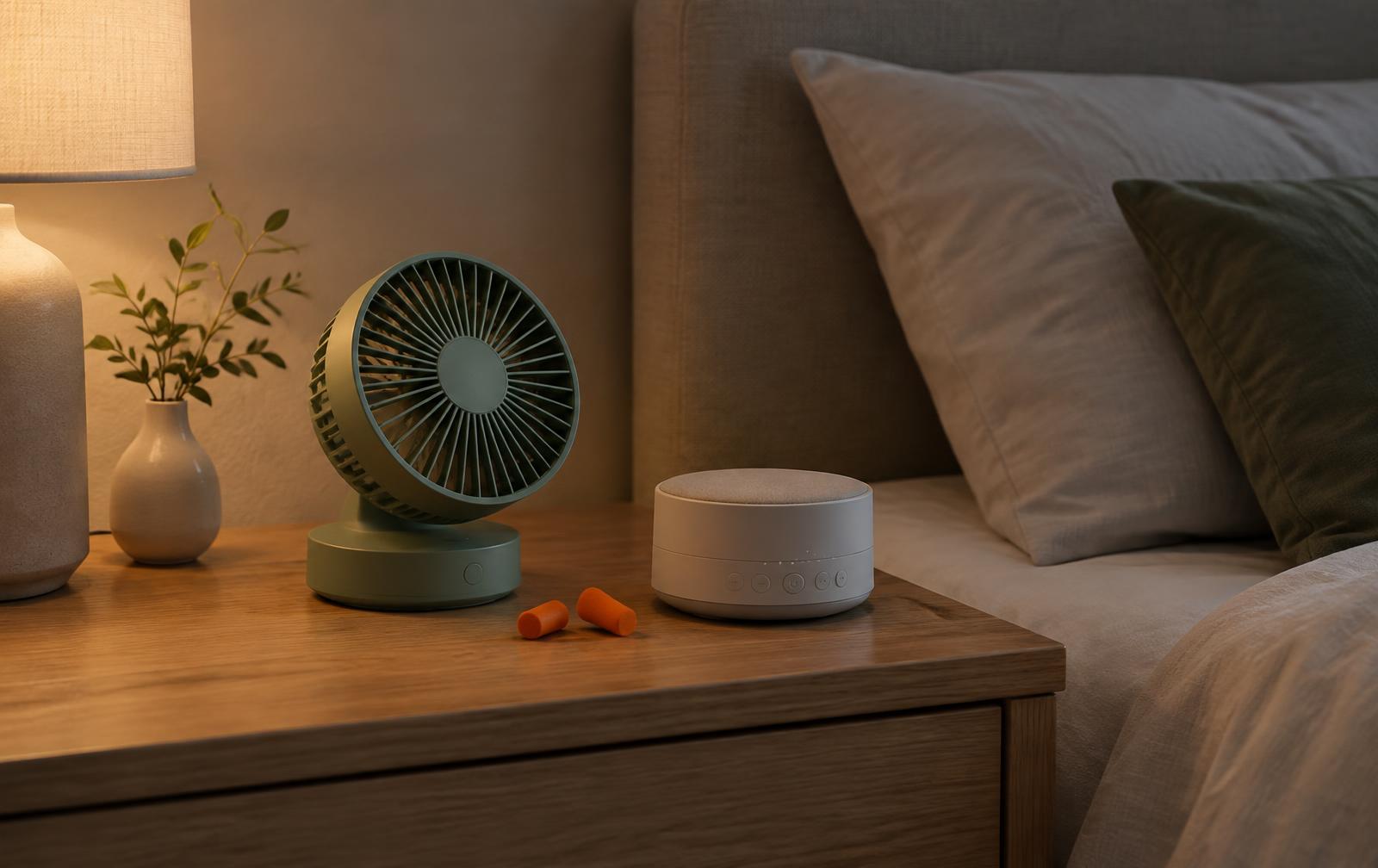
- Masking isn't the same as fixing. Reduce the noise source first when you can.
- Evidence that continuous background noise improves sleep is limited and mixed; a systematic review rated the overall quality of evidence as low.[1]
- Steady background sound and earplugs work differently: one masks changes in sound, while the other reduces the sound reaching your ears. Which works better depends on the noise and your preference.
- Try one option for about a week before judging it, and stop if it makes sleep worse.
The short answer
If sudden sounds wake you, steady background sound may make them less noticeable. If noise is loud or continuous, earplugs may help more. If you can reduce the noise at its source—closing a window, moving an appliance, talking with a neighbor—that's usually the most direct fix.
What the evidence says
A 2021 systematic review of studies using continuous noise as a sleep aid found that results were mixed and the overall quality of evidence was low. Some studies reported benefits, others didn't, and many were small or conducted in hospitals rather than homes. The authors concluded that there isn't strong evidence to support white noise as a general sleep aid.
That doesn't mean it can't help you. It means it's an experiment, not a proven treatment, and it's reasonable to try it only when noise is actually a problem for you.[1]
How the options compare
White noise or sound machines: produce a steady sound that can mask sudden noises. Useful for traffic, neighbors or household sounds that come and go. Keep the volume moderate—loud enough to soften sudden noises, not so loud that it's intrusive.
Fans: provide steady sound plus air movement. A reasonable choice if you also sleep warm; less helpful if you find air on your face uncomfortable or it dries your eyes or nose.
Earplugs: reduce the sound reaching your ears rather than masking it. Useful for loud or constant noise, such as a snoring partner or a noisy street. Some people find them uncomfortable, and they can make alarms or a child harder to hear.
Other steady sounds: free apps offer rain, brown noise or other steady sounds. There's no good evidence that one 'color' of noise is better for sleep than another; choose what you find least distracting.
What you can try
Work in this order and give each change a fair trial.
- 01
Reduce the source
Close windows and doors, move noisy devices, or silence notifications.
- 02
Test the options
If changing sounds are waking you, try steady background sound. If you prefer reducing the sound reaching your ears, try well-fitted earplugs. See which works better for you.
- 03
Start with what you have
A fan or a free white-noise app is a low-cost way to test masking before buying a device.
- 04
Keep volume moderate
Place a sound source across the room rather than next to your head, at a volume that softens sudden noise without being loud.
- 05
Judge after a week
Notice whether you wake less often. If it doesn't help or you sleep worse, stop.
Safety and practical limits
Make sure you can still hear smoke alarms, your own alarm clock and anyone you need to respond to. Keep earplugs clean and don't push them deep into the ear canal. Avoid very loud sound machines, particularly for long periods.
What this may mean for you
If your Sleep Plan suggested earplugs, steady background sound or reducing room noise, your answers indicated that noise disturbs your sleep. Try the option that matches your noise for about a week and see whether you wake less often.
How this relates to the SleepWell360 Sleep Drivers
Sound is one of the six SleepWell360 Sleep Drivers. It often overlaps with Recovery (a busy mind can make you more aware of noise) and Airflow (a fan can change both air movement and background sound).
Continue Improving Your Sleep
How Noise Affects Sleep
How environmental noise can disrupt sleep, why sudden sounds matter more than steady ones, why sensitivity varies, and how to tell whether sound is one of your Sleep Drivers.
Read Guide
How to Sleep When Your Partner Snores
Practical ways to sleep better next to a snoring partner, why masking the noise isn't the whole answer, and the warning signs that mean the snorer should get checked.
Read Guide
Why Do I Keep Waking Up at Night?
Why night waking happens, common contributors to consider, what to do when you can't get back to sleep, and when to talk with a healthcare professional.
Read GuideSources & Research
SleepWell360 articles provide general sleep education and are not medical advice.