How to Sleep When Your Partner Snores
If your partner snores, your immediate problem is noise—and earplugs, background sound and room changes may help you sleep. But masking the sound doesn't address why your partner snores. Loud, frequent snoring, especially with pauses in breathing, gasping or choking, can be a sign of a breathing problem that deserves professional evaluation.
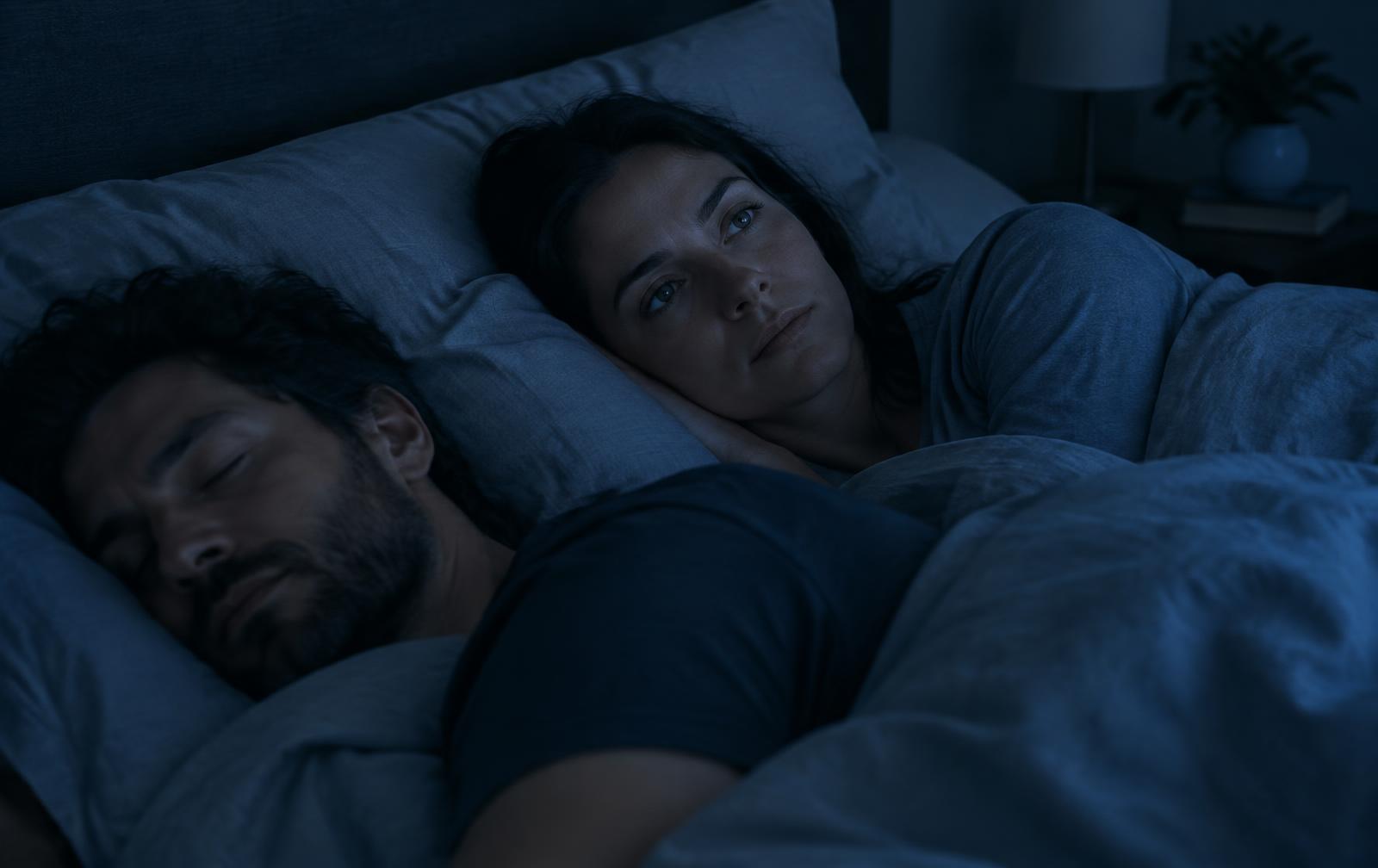
- There are two separate issues: your sleep being disrupted by noise, and your partner's snoring itself.
- Earplugs, steady background sound and changes to the room may help you sleep, but they don't treat the cause of the snoring.
- Loud, frequent snoring with witnessed pauses in breathing, gasping or choking can be a sign of obstructive sleep apnea.[1][2][3]
- If you notice those signs, encourage your partner to talk with a healthcare professional. You're often the only person who can see them.
The short answer
For you, a snoring partner is a Sound problem, and practical steps may help. For your partner, snoring is sometimes harmless and sometimes a sign of a breathing problem during sleep. Both deserve attention, and solving one doesn't solve the other.
What the evidence says
Snoring is common and doesn't always indicate a health problem. However, loud snoring is a common sign of obstructive sleep apnea, a condition in which the airway repeatedly narrows or closes during sleep. Other signs include pauses in breathing noticed by someone else, gasping or choking, and daytime sleepiness.
Obstructive sleep apnea is diagnosed by a healthcare professional, usually with a sleep study. It can't be ruled in or out by how loud snoring sounds or by an app.[1][2][3]
What you can try for your own sleep
These may make the noise easier to live with while you address the bigger picture.
- 01
Try earplugs
Well-fitted foam earplugs reduce the sound reaching your ears. Make sure you can still hear alarms.
- 02
Add steady background sound
A fan or white-noise app may make snoring less noticeable, particularly if it comes and goes.
- 03
Try falling asleep first
Some people find it easier to fall asleep before a snoring partner does.
- 04
Adjust the room
A larger bed, more distance, or occasionally sleeping in separate rooms are practical options some couples use. Separate rooms aren't a failure; they're a choice about sleep.
- 05
Talk about it
Choose a calm time during the day, not the middle of the night, to share what you've noticed.
Why masking the sound isn't enough
Earplugs and background sound only change what you hear. They don't change what's happening in your partner's airway. If you mask the snoring, you may also stop noticing signs that would be worth mentioning to a healthcare professional. Anti-snoring gadgets sold to consumers are not a substitute for evaluation when warning signs are present.
When the snoring partner should get checked
Encourage your partner to talk with a healthcare professional if their snoring is loud and frequent, or if you notice any of these: pauses in breathing, gasping or choking during sleep, or marked daytime sleepiness. It's also worth raising if they report daytime sleepiness, morning headaches, or difficulty staying awake while driving. This article can't diagnose sleep apnea; a healthcare professional can evaluate it properly.[1][2][3]
What this may mean for you
If your Sleep Plan suggested earplugs and talking with your partner about their snoring, your answers indicated that a partner's snoring or movement disturbs your sleep. Try the practical steps for yourself, and read our guide to snoring and breathing during sleep to know which signs to look for.
How this relates to the SleepWell360 Sleep Drivers
Sound is one of the six SleepWell360 Sleep Drivers. It often overlaps with Recovery (a busy mind can make you more aware of noise) and Airflow (a fan can change both air movement and background sound). Breathing concerns are handled separately from the Drivers as a safety signal, because they may need professional evaluation rather than a sleep-environment change.
Continue Improving Your Sleep
Snoring, Gasping and Breathing During Sleep: When to Get Checked
Which breathing-related sleep signs are common, which deserve a conversation with a healthcare professional, and what an evaluation usually involves.
Read Guide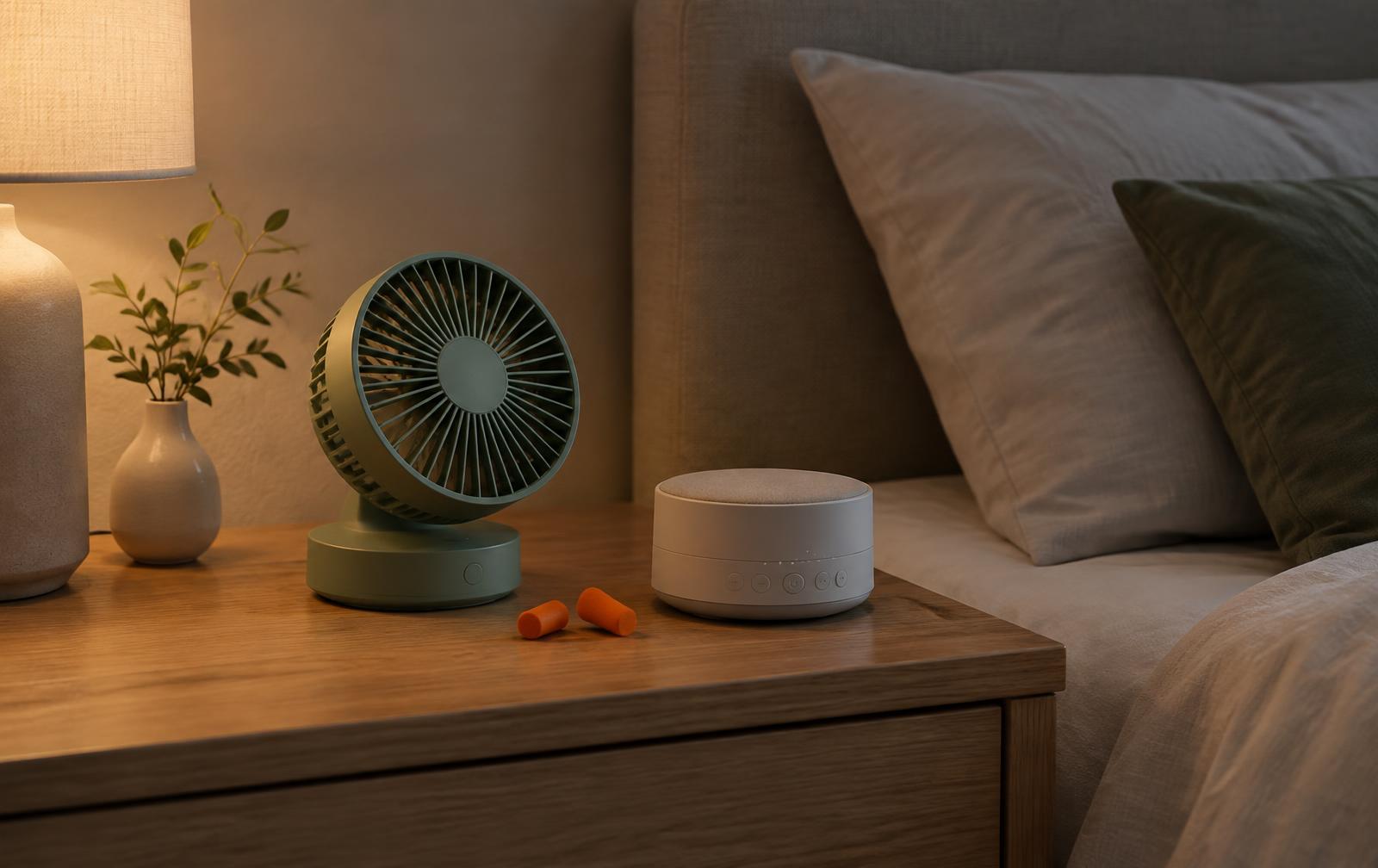
White Noise, Fans or Earplugs?
How white noise, fans and earplugs compare, what the research does and doesn't show, and how to choose and test the right option for your bedroom.
Read Guide
How Noise Affects Sleep
How environmental noise can disrupt sleep, why sudden sounds matter more than steady ones, why sensitivity varies, and how to tell whether sound is one of your Sleep Drivers.
Read GuideSources & Research
SleepWell360 articles provide general sleep education and are not medical advice.