How Dark Should Your Bedroom Be?
For most people, a dark bedroom is easier to sleep in, and reducing unnecessary light at night is a reasonable goal. There is no proven universal darkness level. Start by removing the light sources you can, then cover or control the rest, and use curtains or an eye mask if they help—while keeping enough light to move around safely.
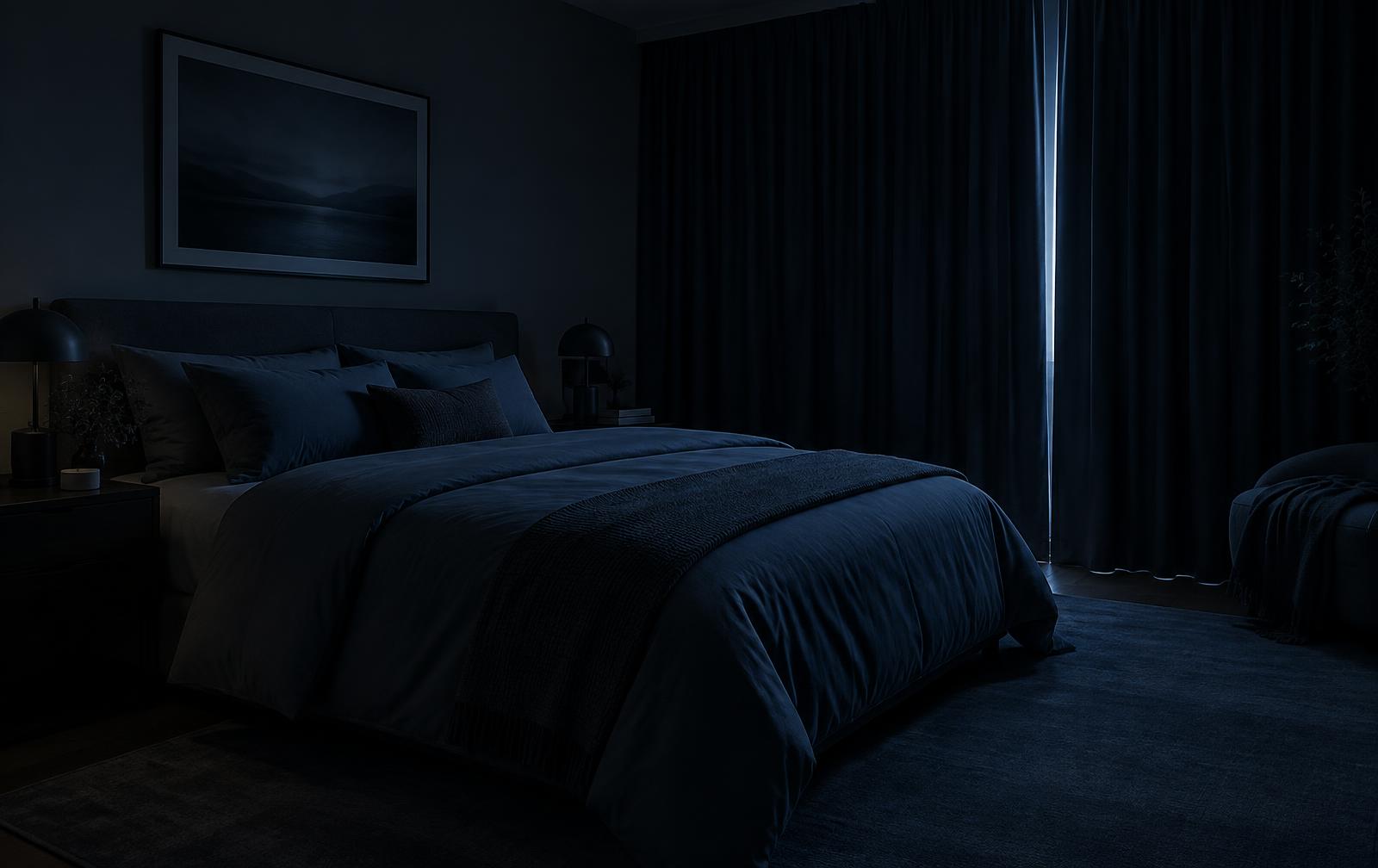
- Darkness during the sleep period supports the body clock's night signal. Expert recommendations suggest keeping bedroom light as low as practical.[1]
- Start with the simplest fixes: turn off, remove or cover light sources before buying anything.
- Complete darkness isn't necessary or practical for everyone. Safety comes first if you need to get up at night.
- If early light is waking you, controlling the window may matter more than anything else in the room.
The short answer
Darker is usually better for sleep, but 'dark enough' varies from person to person. There isn't a single darkness level everyone needs. A practical test: if light is noticeable when you're trying to fall asleep, or if you wake up to light, it's worth reducing.
What the evidence says
An expert consensus on indoor light recommends keeping the sleep environment as dark as practical for healthy adults, while allowing low light when needed for safety.
In a small laboratory study, sleeping one night with moderate overhead room light was associated with higher nighttime heart rate and changes in next-morning insulin resistance compared with dim light. The study didn't show harm from a small nightlight, and results from one night in young adults shouldn't be treated as a universal rule, but it supports reducing unnecessary light.
Light in the evening and at night can also affect melatonin and circadian timing, and sensitivity varies considerably between individuals.[1][2][3]
Common sources of bedroom light
Streetlights, car headlights and early sunrise through windows; hallway or bathroom light under the door; standby LEDs on TVs, chargers and air purifiers; bright alarm clocks; phones lighting up with notifications; and a partner reading or using a device.
What you can try
Work through this order. Stop when the room feels dark enough for you.
- 01
Remove unnecessary light
Turn off what doesn't need to be on, move chargers and devices out of view, and put your phone face-down or in another room.
- 02
Cover or control what stays
Dim the clock display, cover small LEDs, and close the bedroom door to block hallway light.
- 03
Address the windows
Heavier curtains, blackout liners or shades can block streetlight and early sunrise. Check the edges, where light often leaks in.
- 04
Try an eye mask
If you can't control the room—travel, shared rooms, a partner who reads—an eye mask is a simple option to test.
Safety comes first
If you get up during the night, are at risk of falls, or care for a child or someone else, you may need some light. A dim, warm, low-positioned nightlight or a motion-activated light near the floor can provide visibility without lighting up the whole room.
What this may mean for you
If your Sleep Plan suggested blocking light sources, your answers indicated that your room isn't fully dark or that early light wakes you. Try the steps above for a week and notice whether you fall asleep more easily or wake less often at dawn.
How this relates to the SleepWell360 Sleep Drivers
Light is one of the six SleepWell360 Sleep Drivers. It often works alongside Recovery: a consistent wake time and a calm wind-down make light changes easier to keep, and light timing in turn makes a regular schedule easier to hold.
Continue Improving Your Sleep
How Light Affects Sleep
How light timing, brightness, duration and color influence your body clock, why evening and nighttime light can make sleep harder, and practical changes to try.
Read Guide
Why Do I Keep Waking Up at Night?
Why night waking happens, common contributors to consider, what to do when you can't get back to sleep, and when to talk with a healthcare professional.
Read Guide
How Screens Before Bed Affect Sleep
What studies actually show about screens and sleep, why light and content are separate issues, and practical experiments to try instead of strict screen bans.
Read GuideSources & Research
SleepWell360 articles provide general sleep education and are not medical advice.
- 1.PLOS Biology: Recommendations for daytime, evening, and nighttime indoor light exposure to best support physiology, sleep, and wakefulness in healthy adults (Brown et al., 2022)
- 2.Proceedings of the National Academy of Sciences: Light exposure during sleep impairs cardiometabolic function (Mason et al., 2022)
- 3.Proceedings of the National Academy of Sciences: High sensitivity and interindividual variability in the response of the human circadian system to evening light (Phillips et al., 2019)