How Screens Before Bed Affect Sleep
Screens before bed can affect sleep in two different ways: the light they give off and the content that keeps your mind engaged. Controlled studies show that long, bright evening screen use can delay sleep timing, but everyday effects vary with brightness, distance, duration, timing and what you're doing. There is no universal 'no screens after X p.m.' rule.
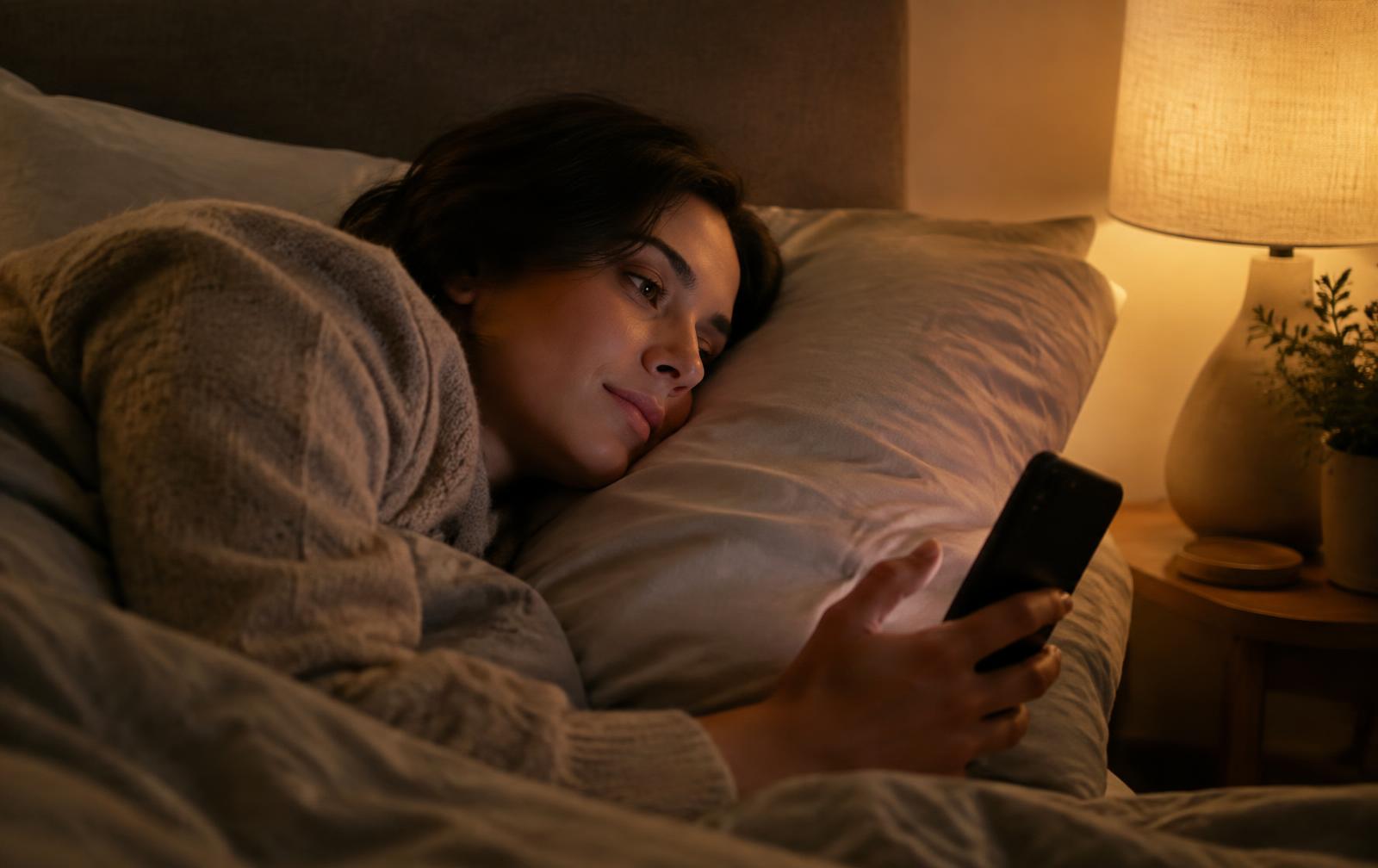
- In a controlled study, several hours of reading on a bright e-reader before bed delayed melatonin and sleep compared with a printed book. The effect in everyday life is likely smaller and varies.[1]
- Screen use is consistently associated with later and shorter sleep in observational studies, but those studies can't fully separate cause from effect.[2][3]
- What you're doing may matter too. Stimulating, emotional or hard-to-stop content can keep you engaged later into the evening, separate from the effects of screen light.
- Blue-light-filtering glasses have not been shown to reliably improve sleep, based on current evidence.[4]
The short answer
Screens aren't automatically bad for sleep, and a few minutes on your phone won't necessarily ruin your night. But bright screens held close to your face for long periods late in the evening, combined with content that keeps you engaged, can make it harder to fall asleep. The practical goal is to reduce both the light and the stimulation as bedtime gets closer.
Two separate effects: light and content
Light: screens emit light, including shorter wavelengths the body clock is sensitive to. Brighter screens, longer use and closer viewing distance all increase the amount of light reaching your eyes.
Content: messages, news, games, work email and endless feeds can hold your attention, stir emotions or simply keep you using the device longer than intended. This is a separate potential pathway from the light itself, and the relative importance of each will vary.
What the evidence says
The most-cited controlled study compared reading on a light-emitting e-reader with reading a printed book for about four hours before bed over several nights. The e-reader delayed melatonin timing, lengthened the time it took to fall asleep and reduced next-morning alertness. It was a small laboratory study with long, bright exposure, so it shows that screen light can matter, not that every screen use has the same effect.
Systematic reviews in children, adolescents and young adults consistently find associations between more screen use and later bedtimes, shorter sleep and poorer sleep quality. Because most of these studies are observational, they can't prove that screens cause the problems; people who sleep poorly may also use screens more.
Features like night modes and blue-light-filtering glasses reduce some shorter-wavelength light but don't change brightness or content. A Cochrane review found no clear evidence that blue-light-filtering glasses improve sleep.[1][2][3][4]
Why 'no screens after X p.m.' isn't a universal rule
Common advice to stop screens 30 or 60 minutes before bed is a reasonable starting point, not a threshold established by research. The effect depends on how bright the screen is, how close you hold it, how long you use it, how late you use it and what you're doing. Someone reading a dim e-book for ten minutes is in a very different situation from someone gaming on a bright screen until midnight.
What you can try
Pick one experiment and try it for a week.
- 01
Lower the brightness
Turn screen brightness down in the evening and hold the device farther from your face.
- 02
Change the content
Swap work email, news and fast-moving feeds for something calmer, or set a clear stopping point.
- 03
Move screens earlier
Try finishing screen use earlier in the evening—30 to 60 minutes before bed is a reasonable starting point—and notice whether sleep comes more easily.
- 04
Have an alternative ready
Keep a printed book, puzzle or other calm activity by the bed so there's something to reach for instead.
- 05
Charge it elsewhere
Charging your phone outside the bedroom removes late-night notifications and the temptation to check.
What this may mean for you
If your Sleep Plan suggested putting screens away earlier, your answers indicated that you use screens close to bedtime. Try the change for a week or two and keep track of how long it seems to take you to fall asleep.
How this relates to the SleepWell360 Sleep Drivers
Light is one of the six SleepWell360 Sleep Drivers. It often works alongside Recovery: a consistent wake time and a calm wind-down make light changes easier to keep, and light timing in turn makes a regular schedule easier to hold. Screen content also overlaps with Recovery, because a stimulated mind can make it harder to wind down.
Continue Improving Your Sleep

How to Build a Better Wind-Down Routine
What a wind-down routine is, what the evidence says about light, warm showers and screens, and how to build a simple evening routine you can actually keep.
Read Guide
How Long Should It Take to Fall Asleep?
What's typical for falling asleep, why regularly taking a long time can matter, factors that may be involved, and when to talk with a healthcare professional.
Read Guide
How to Calm a Racing Mind Before Bed
Why your mind races at bedtime, what research shows about writing, relaxation and mindfulness, and when a racing mind is a sign to seek help.
Read GuideSources & Research
SleepWell360 articles provide general sleep education and are not medical advice.
- 1.Proceedings of the National Academy of Sciences: Evening use of light-emitting eReaders negatively affects sleep, circadian timing, and next-morning alertness (Chang et al., 2015)
- 2.Sleep Medicine Reviews: Screen time and sleep among school-aged children and adolescents: a systematic literature review (Hale & Guan, 2015)
- 3.Sleep Medicine Reviews: Digital media use and sleep in late adolescence and young adulthood: a systematic review (Brautsch et al., 2023)
- 4.Cochrane Database of Systematic Reviews: Blue-light filtering spectacle lenses for visual performance, sleep, and macular health in adults (Singh et al., 2023)