How Light Affects Sleep
Light is one of the strongest signals your body clock uses to set the timing of sleep and wakefulness. Bright light in the morning and during the day tends to support a regular rhythm, while bright light late in the evening and at night can push sleep timing later. Timing, brightness, duration and color all matter, and people vary.
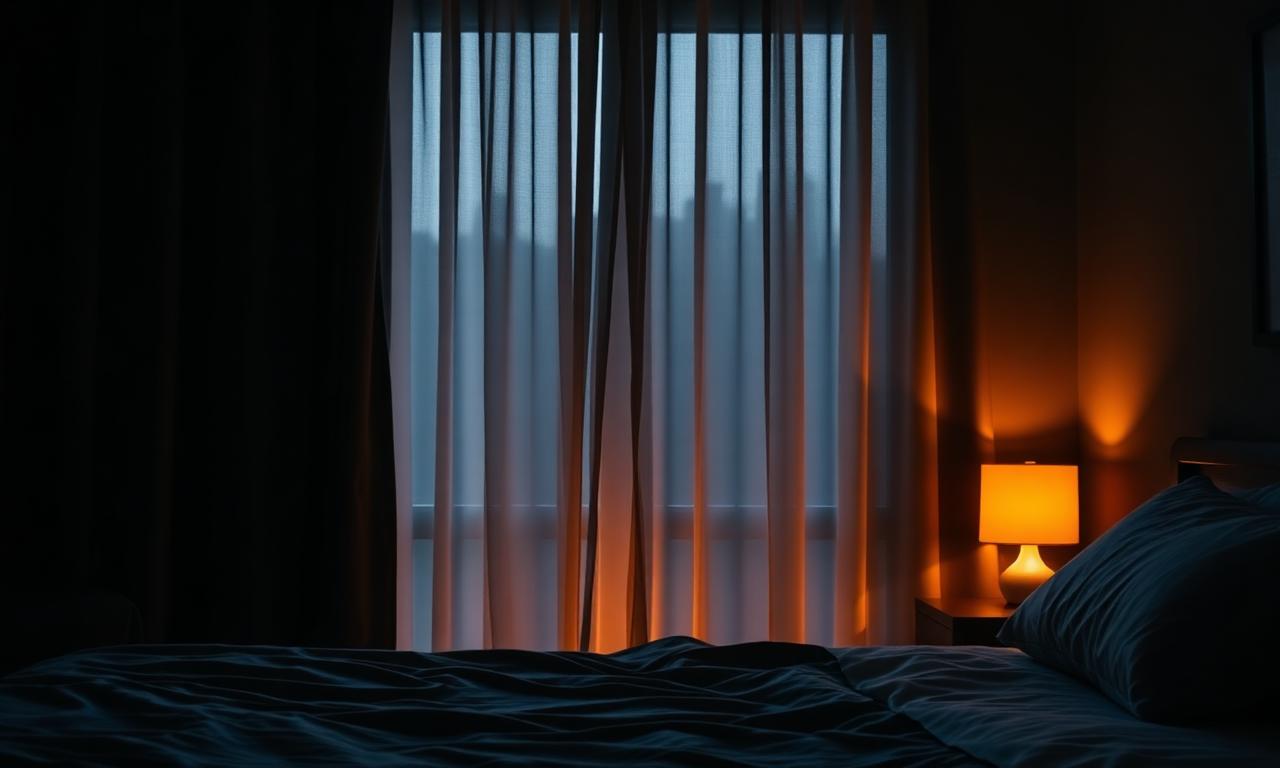
- Light is a major signal for the body clock. When you see light matters as much as how much you see.[1][2]
- Brighter light earlier in the day and dimmer light in the evening is a reasonable pattern for most people to experiment with.[2]
- Bright evening light can delay melatonin and sleep timing in laboratory studies, but people differ widely in how sensitive they are.[3][4]
- Not all light is harmful. The goal is contrast—bright days, dim evenings, dark nights—not avoiding light altogether.
The short answer
Your body clock (circadian system) runs on a cycle of roughly 24 hours, and light reaching your eyes is one of the main ways it stays aligned with the day. Light in the morning tends to shift the clock earlier; light in the late evening and night tends to shift it later.
That's why the same lamp can be helpful at 8 a.m. and less helpful at 11 p.m. It isn't that light is good or bad. It's that timing changes the message.
What the evidence says
Four features of light shape its effect on the body clock: timing (when you see it), intensity (how bright it is), duration (how long you see it) and wavelength (its color). Light rich in shorter, blue-ish wavelengths tends to have a stronger effect on the circadian system than warmer light of the same brightness, but brightness and timing still matter a great deal.
In a controlled study, ordinary room light in the hours before bed suppressed and delayed melatonin compared with dim light. Another laboratory study found more than a fifty-fold difference between individuals in their melatonin response to evening light under controlled conditions. These are laboratory findings in small groups, so they show that evening light can matter, not exactly how much it matters for you at home.
An expert consensus published in 2022 proposed practical ranges for daytime, evening and nighttime indoor light for healthy adults. Its central idea is simple: more light during the day, less in the evening, and as little as practical during sleep.[1][2][3][4]
Daytime light versus evening and nighttime light
Daytime light, especially outdoors, is usually far brighter than indoor lighting and helps give the body clock a clear 'day' signal. Evening light, especially bright overhead light and screens held close to the face, can make the body clock act as if the day is still going.
During sleep, darkness is helpful for most people. A small laboratory study found that sleeping one night with moderate room light on was associated with changes in heart rate and next-morning blood sugar measures compared with sleeping in dim light. It was one night in healthy young adults, so it's a reason to reduce unnecessary light, not a reason to worry about every nightlight.[2][5]
What you can try
Treat these as experiments. Pick one or two and try them for a week or two.
- 01
Get brighter light earlier
Spend some time outdoors or near a bright window in the first part of your day. There is no universal number of minutes; more light earlier is a reasonable starting point.
- 02
Dim the evening
In the hour or two before bed, switch from overhead lights to lamps and keep light lower and warmer. Try it and notice whether sleep comes more easily.
- 03
Turn screen brightness down
If you use screens in the evening, lower the brightness and hold them farther away. Also consider whether the content itself is keeping you alert or engaged.
- 04
Keep the night dark
Remove or cover unnecessary light sources in the bedroom, while keeping enough light to move around safely.
What this may mean for you
If your Sleep Plan pointed to Light, your answers suggest that light at night, early-morning light or evening screen use may be affecting your sleep. The specific articles on bedroom darkness, morning light and screens explain how to test each one.
Some people are much more sensitive to light than others. If a change doesn't seem to help after a fair trial, it may simply not be your main Driver.
How this relates to the SleepWell360 Sleep Drivers
Light is one of the six SleepWell360 Sleep Drivers. It often works alongside Recovery: a consistent wake time and a calm wind-down make light changes easier to keep, and light timing in turn makes a regular schedule easier to hold.
When to seek professional evaluation
If your sleep timing is far off from the schedule you need—for example, you can't fall asleep until very late and can't wake for work—or if trouble sleeping persists for months despite reasonable changes, talk with a healthcare professional. Circadian rhythm disorders and insomnia are diagnosable and treatable.
Continue Improving Your Sleep
How Dark Should Your Bedroom Be?
Why nighttime light can affect sleep, common sources of bedroom light, a practical order for reducing it, and why complete darkness isn't necessary for everyone.
Read Guide
How Screens Before Bed Affect Sleep
What studies actually show about screens and sleep, why light and content are separate issues, and practical experiments to try instead of strict screen bans.
Read Guide
Why a Consistent Wake Time Matters
How a consistent wake time supports your body clock, what research on sleep regularity shows, and how to make a steadier schedule realistic.
Read GuideSources & Research
SleepWell360 articles provide general sleep education and are not medical advice.
- 1.Somnologie: Effects of light on human circadian rhythms, sleep and mood (Blume, Garbazza & Spitschan, 2019)
- 2.PLOS Biology: Recommendations for daytime, evening, and nighttime indoor light exposure to best support physiology, sleep, and wakefulness in healthy adults (Brown et al., 2022)
- 3.Journal of Clinical Endocrinology & Metabolism: Exposure to room light before bedtime suppresses melatonin onset and shortens melatonin duration in humans (Gooley et al., 2011)
- 4.Proceedings of the National Academy of Sciences: High sensitivity and interindividual variability in the response of the human circadian system to evening light (Phillips et al., 2019)
- 5.Proceedings of the National Academy of Sciences: Light exposure during sleep impairs cardiometabolic function (Mason et al., 2022)