Best Humidity for Sleep: What the Evidence Actually Says
There is no scientifically proven perfect humidity for sleep. General indoor-air guidance from the EPA suggests keeping indoor humidity below 60% and ideally between about 30% and 50%, mainly to limit mold and dust mites. That range is a practical starting point, not a sleep target. Very dry or very humid air may affect comfort and congestion, and what feels best can vary by person and season.
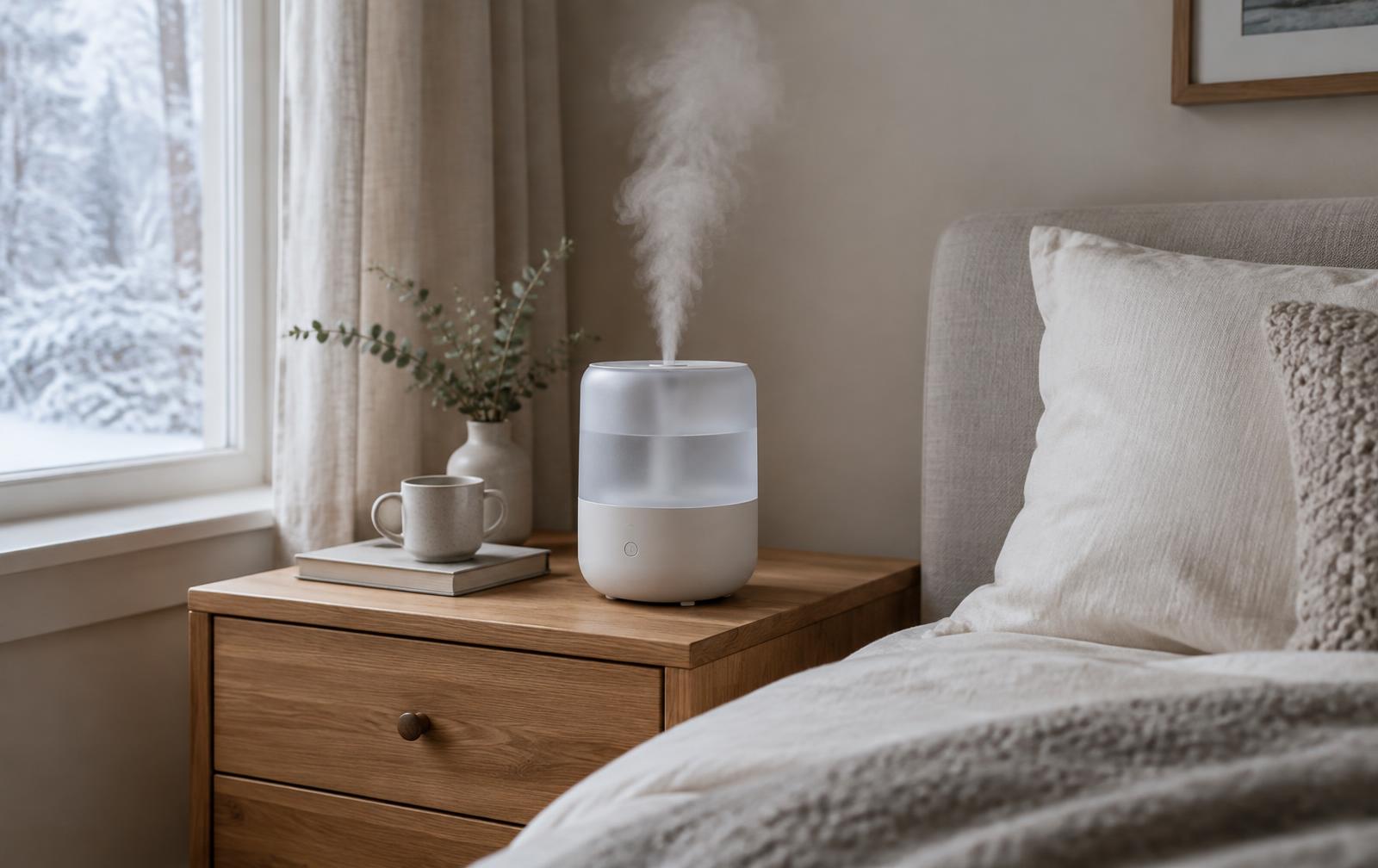
- The commonly quoted 30–50% range comes from general EPA indoor-air guidance aimed at limiting mold and moisture, not from sleep research.[1]
- Very dry air may contribute to dry eyes, throat or nasal irritation, and high humidity combined with heat can make sleep less comfortable.[3][4]
- What feels comfortable varies with season, climate and the person. Use how you feel on waking as your guide.
- If you use a humidifier, keep it clean and avoid over-humidifying.[2]
The short answer
Humidity matters most at the extremes. If your bedroom air is very dry—often in winter with the heat on—you may wake with a dry throat or stuffy nose. If it's very humid, the room may feel clammy and warm, and dampness can encourage mold and dust mites. In between, there isn't good evidence that one exact number improves sleep.
What the evidence says
General guidance vs. sleep evidence: the EPA recommends keeping indoor humidity below 60% and ideally between 30% and 50% to help prevent mold growth. This is building and indoor-air guidance, not a finding that sleep is best within that range.
Studies on sleep specifically are limited. A review of the thermal sleep environment notes that high humidity combined with heat can increase wakefulness and reduce deeper sleep, largely because it makes it harder for the body to lose heat. A broader review of indoor humidity found that very low humidity is associated with complaints of dry eyes and airway irritation, and that research specifically on humidity and sleep quality is limited.[1][3][4]
Seasonal changes
Indoor humidity often drops in winter, when cold outdoor air holds little moisture and heating dries the air further. In summer, humidity may rise, especially without air conditioning. The same bedroom can move from too dry to too humid over a year, so an adjustment that helps in January may not be needed in July.
How to recognize the extremes
Signs of dry air: waking with a dry mouth, throat or nose; static shocks; dry skin or lips. Signs of humid air: a clammy or muggy feel, condensation on windows, musty smells or visible mold. An inexpensive hygrometer (humidity monitor) can show your actual level if you want to check rather than guess.[1]
What you can try
Start by checking, then adjust gradually. Give each change about a week.
- 01
Measure first
Use a hygrometer for a few nights to see where your bedroom actually sits.
- 02
If it's dry
If you use a humidifier, increase humidity gradually and notice whether you feel more comfortable. EPA guidance generally recommends keeping indoor humidity below 60%, ideally around 30–50%, primarily to limit moisture and mold—not because that range has been proven optimal for sleep.
- 03
If it's humid
Improve ventilation, use bathroom and kitchen exhaust fans, run air conditioning, or try a dehumidifier.
- 04
Watch for moisture problems
Condensation on windows or musty smells suggest the room is too humid; reduce humidification or increase ventilation.
Humidifier and dehumidifier safety
The EPA advises using water with low mineral content, such as distilled water, cleaning portable humidifiers frequently to prevent buildup of scale and microorganisms, and not humidifying above 50% relative humidity. Follow the manufacturer's instructions for cleaning and filter changes, and empty dehumidifier tanks regularly.[2]
What this may mean for you
If your Sleep Plan suggested checking whether your bedroom feels unusually dry, humid or stuffy, Airflow was one of your priority areas and you didn't report allergies. Check your actual humidity first, then experiment and notice whether you wake more comfortable.
How this relates to the SleepWell360 Sleep Drivers
Airflow is one of the six SleepWell360 Sleep Drivers. It covers how fresh, clean and comfortable the air in your bedroom feels, including ventilation, humidity, allergens and congestion. It overlaps closely with Temperature (opening a window or running a fan changes both) and sometimes with Sound (a fan or purifier also adds background noise). Breathing problems during sleep, such as loud snoring with pauses or gasping, are handled separately as a safety signal rather than as an Airflow issue.
Continue Improving Your Sleep
How Air Quality Affects Sleep
What SleepWell360 means by Airflow, what research shows about bedroom ventilation, humidity and allergens, and practical free or low-cost changes to try first.
Read Guide
Nighttime Allergies and Congestion: How to Improve Your Bedroom
Common bedroom allergens, why symptoms can feel worse at night, a practical order for testing bedroom changes, and when congestion needs a healthcare professional.
Read Guide
The Best Temperature for Sleep—and Why It Matters
Is 65°F really the best temperature for sleep? Learn what research says about bedroom temperature, body temperature and finding your personal sleep temperature.
Read GuideSources & Research
SleepWell360 articles provide general sleep education and are not medical advice.
- 1.U.S. Environmental Protection Agency: A Brief Guide to Mold, Moisture and Your Home
- 2.U.S. Environmental Protection Agency: Use and Care of Home Humidifiers
- 3.Journal of Physiological Anthropology: Effects of thermal environment on sleep and circadian rhythm (Okamoto-Mizuno & Mizuno, 2012)
- 4.International Journal of Hygiene and Environmental Health: Indoor air humidity, air quality, and health – an overview (Wolkoff, 2018)