How Air Quality Affects Sleep
The air in your bedroom—how fresh it is, how humid it is, and what allergens it carries—can affect how comfortable you feel overnight. A few small studies suggest better bedroom ventilation may improve some measures of sleep, but the evidence is limited. If you wake up stuffy, congested or uncomfortable, simple changes to your bedroom environment are worth testing before buying anything.
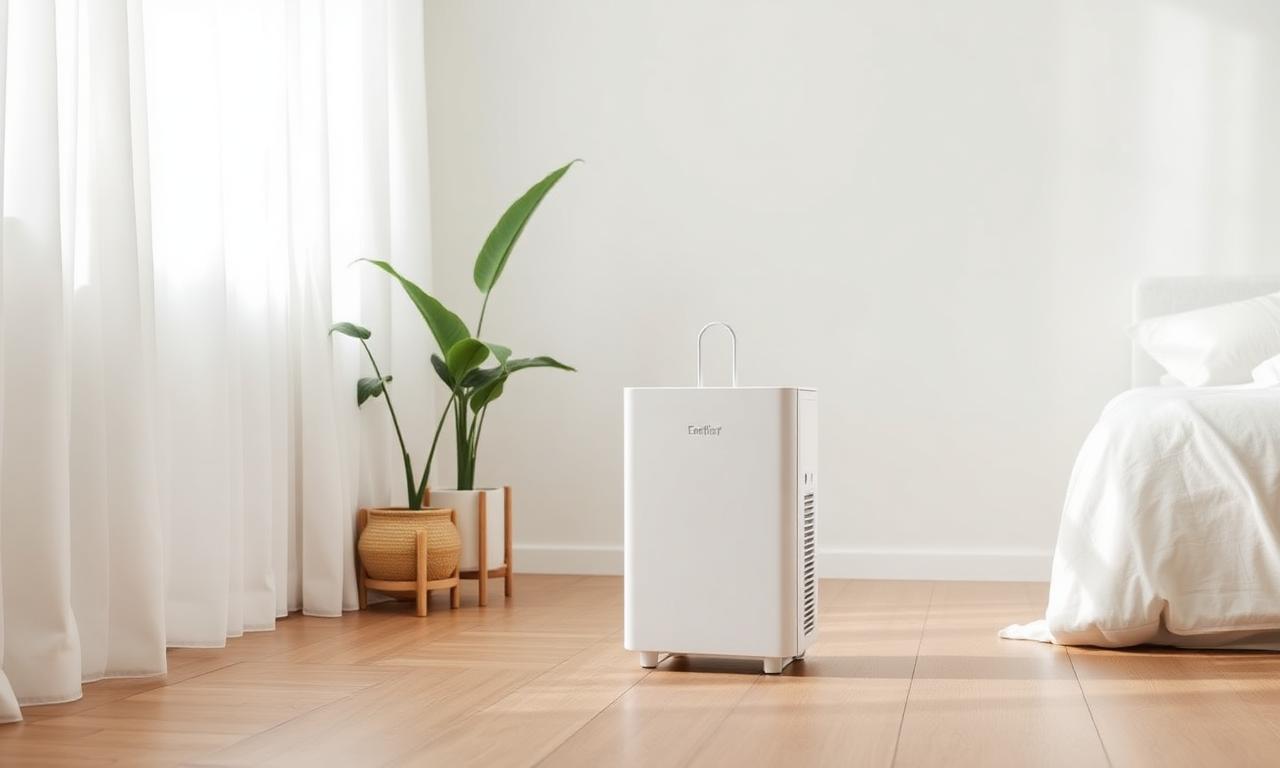
- Ordinary bedroom air isn't dangerous, but stuffiness, dryness, humidity and allergens can make nights less comfortable for some people.
- Small field studies found that better bedroom ventilation was linked with some improvements in measured or reported sleep. The evidence is promising but limited.[1][2][3]
- The EPA's order of priorities for indoor air is source control first, then ventilation, then filtration.[4]
- Improving air quality doesn't guarantee better sleep. Treat changes as experiments and notice whether they help you.
The short answer
You spend hours in a closed bedroom every night. If the air feels stale, too dry, too humid, or triggers congestion, it can make sleep less comfortable. For many people, bedroom air isn't a major factor. For others—especially people who wake congested or stuffy—it may be worth attention.
What SleepWell360 means by Airflow
Airflow is our shorthand for the overall quality and comfort of the air you breathe overnight. It includes ventilation (how much fresh air replaces stale air), stuffiness, humidity, allergens such as dust mites, pollen and pet dander, and congestion that may be linked to your bedroom environment.
What the evidence says
It helps to separate three kinds of evidence. First, plausible mechanisms: congestion can make breathing through the nose harder, and very dry or humid air can affect comfort. Second, observational studies, which show associations but can't prove cause and effect. Third, experimental studies that deliberately change the bedroom air and measure sleep, which provide stronger but still limited evidence.
A few small experiments have tested ventilation directly. In one Danish study of student dormitory rooms, sleep measured by wrist-worn devices and perceived air freshness were better during weeks with more ventilation. A Dutch study of 17 young adults found some differences in sleep measures when a window or bedroom door was left open. A later field study that covertly changed ventilation rates found more awakenings and less deep sleep at lower ventilation in the bedrooms where the difference in air was clearest.
These studies were small, mostly involved healthy young adults, and relied largely on wearable devices rather than full sleep studies. They suggest ventilation may matter, but they don't establish a specific target that improves sleep for everyone.[1][2][3]
What you can try
Start with free or low-cost changes. Try one or two for a week and notice how you feel when you wake.
- 01
Reduce sources
Avoid smoking indoors, reduce strong fragrances or other irritants if they bother you, and address dampness or visible mold.
- 02
Freshen the air
Open a window or the bedroom door for a while before bed, or overnight if outdoor air, noise, safety and pollen allow.
- 03
Notice humidity
If the air feels very dry or clammy, see our humidity guide for how to check and adjust it.
- 04
Address allergens
If you wake congested, bedding, cleaning and pet changes may be worth testing. See our nighttime allergies guide.
- 05
Consider filtration last
If you've tried the steps above and suspect airborne particles, an air cleaner is an option to consider, not a starting point.
What this may mean for you
If your Sleep Plan pointed to Airflow, your answers suggested congestion, allergies or bedroom air that feels uncomfortable. That's a reason to test some changes to your bedroom environment, not a sign that your air is unhealthy.
How this relates to the SleepWell360 Sleep Drivers
Airflow is one of the six SleepWell360 Sleep Drivers. It covers how fresh, clean and comfortable the air in your bedroom feels, including ventilation, humidity, allergens and congestion. It overlaps closely with Temperature (opening a window or running a fan changes both) and sometimes with Sound (a fan or purifier also adds background noise). Breathing problems during sleep, such as loud snoring with pauses or gasping, are handled separately as a safety signal rather than as an Airflow issue.
When to seek professional evaluation
Talk with a healthcare professional if congestion is persistent or severe, if you have wheezing or shortness of breath, or if you snore loudly, gasp or have been told you stop breathing during sleep. These symptoms deserve evaluation rather than just bedroom changes.
Continue Improving Your Sleep
Nighttime Allergies and Congestion: How to Improve Your Bedroom
Common bedroom allergens, why symptoms can feel worse at night, a practical order for testing bedroom changes, and when congestion needs a healthcare professional.
Read Guide
The Best Temperature for Sleep—and Why It Matters
Is 65°F really the best temperature for sleep? Learn what research says about bedroom temperature, body temperature and finding your personal sleep temperature.
Read Guide
Snoring, Gasping and Breathing During Sleep: When to Get Checked
Which breathing-related sleep signs are common, which deserve a conversation with a healthcare professional, and what an evaluation usually involves.
Read GuideSources & Research
SleepWell360 articles provide general sleep education and are not medical advice.
- 1.Indoor Air: The effects of bedroom air quality on sleep and next-day performance (Strøm-Tejsen et al., 2016)
- 2.Indoor Air: Window/door opening-mediated bedroom ventilation and its impact on sleep quality of healthy, young adults (Mishra et al., 2018)
- 3.Science of the Total Environment: A single-blind field intervention study of whether increased bedroom ventilation improves sleep quality (Fan et al., 2023)
- 4.U.S. Environmental Protection Agency: Improving Indoor Air Quality